

























































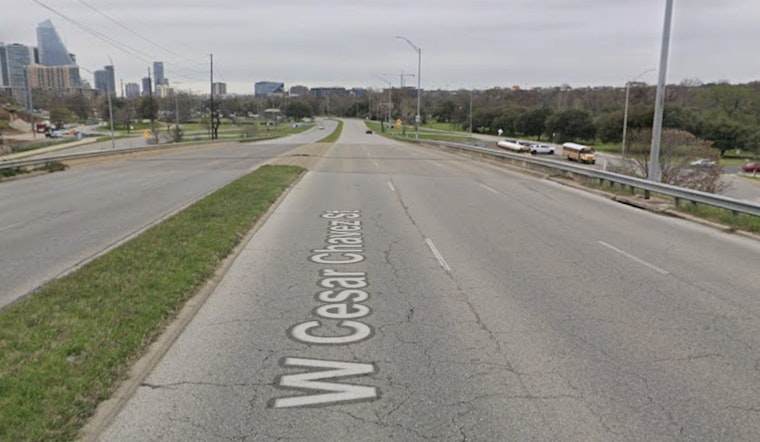
If Austin moves to strip Cesar Chavez’s name from its main downtown artery, the next big question is who pays to swap out the signs and fix all the addresses, maps and business paperwork. In most cases, the person or group that files the application is on the hook. That can change if the City Council votes to waive fees or absorb sign costs, which would pull the money from city budgets instead. That cost question now sits at the center of a brewing debate as local leaders ask the city manager for outreach, price tags and an impact assessment for East and West Cesar Chavez Street.
How renaming requests generally work
In Austin, a street renaming usually starts with an application from a property owner whose land touches the block in question or with a request sponsored directly by a council member. City staff then notifies nearby property owners and circulates the proposal to addressing staff, emergency services and the Transportation and Public Works department for review. The Downtown Commission and recent council materials call for extensive community outreach and a thorough technical review before any ordinance ever hits the council agenda, according to the City of Austin.
Fees, signs and what those numbers mean
The city lists a nonrefundable street renaming application fee in the roughly $1,500 to $1,600 range, with sign fabrication and installation calculated separately by the type, size and number of signs, plus labor. Those figures were reported by the Austin American-Statesman. A city spokesperson told the paper that the application fee is meant to cover staff time for correspondence, address verification, GIS mapping, mailings, printing and prepping items for council. City staff is now working up a more detailed cost estimate for the Cesar Chavez proposal.
When City Hall picks up the tab
Council has the power to waive application and sign costs, which shifts the bill from private applicants to taxpayers. In 2022, for example, Council itself initiated the change from Confederate Street to Maggie Mayes Street. Staff estimated the modest sign replacement cost, about $282 for two signs, could be absorbed by the Signs and Markings operating budget, according to Community Impact. In a separate case, when a segment of Red River Street was renamed in 2025, staff estimated roughly $500 for fabricating and installing two signs, an amount covered by the Transportation department’s operating budget, according to a City of Austin report.
What happens next
Four council members have asked City Manager T.C. Broadnax to draw up a community outreach plan and return to a May 26 work session with cost estimates and a proposed timeline for renaming both East and West Cesar Chavez Street. The memo directs staff to host hybrid listening sessions, run surveys and conduct targeted outreach to businesses and residents along the corridor, according to Spectrum News Austin.
What residents and businesses should expect
If the council advances the renaming, property owners and businesses along the route could face a string of practical changes. That could include new exterior signage, updated stationery and websites, potential reissuance of permits and adjustments tied to emergency addressing systems, all of which staff has been asked to price out. Councilwoman Vanessa Fuentes told FOX 7 Austin, “What we’ve heard loud and clear from our community is the importance of us renaming Cesar Chavez Street in our downtown quarter.”
Legal and procedural notes
Any move to waive fees or to have the city cover sign costs requires a separate City Council vote. Cost relief is not automatic even when the council is the one proposing the name change, as noted by the Austin American-Statesman. Council members are also expected to factor in technical impacts, from 911 addressing to internal department reviews, when staff returns with its full report at the May 26 work session.




