

























































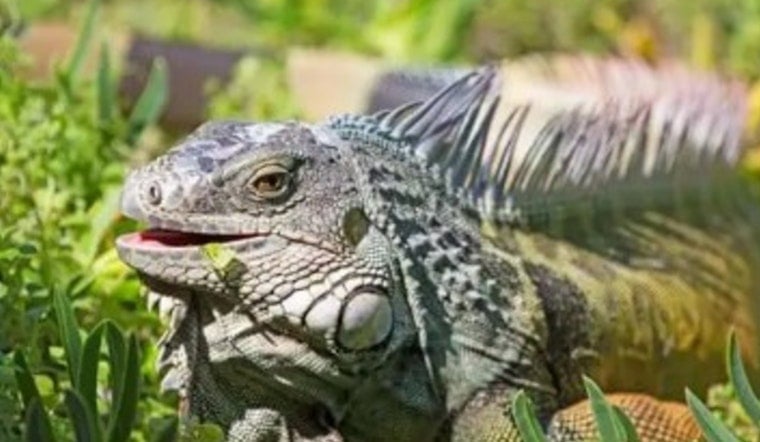
A routine traffic stop in Winter Haven on Thursday turned surreal when Florida Highway Patrol troopers found 13 live iguanas in the bed of a pickup truck, many with their feet zip tied behind their backs. The driver was arrested, and the reptiles were turned over to wildlife officials as they opened an investigation.
According to WTSP, troopers stopped a Ford F-150 towing a utility trailer that was headed west on State Road 540 (Winter Lake Road) near Thornhill Road after noticing the trailer’s tag light was not illuminating the license plate. The driver, identified as 32-year-old Rendon Casildo-Acdiel, was booked on a charge of driving with a suspended license, the outlet reports.
A K-9 alerted to the vehicle, which led to a closer search. Troopers said they uncovered five coolers of iced tilapia and 13 live iguanas in the truck bed with their feet bound behind them. Investigators from the Florida Fish and Wildlife Conservation Commission (FWC) and the Florida Department of Agriculture and Consumer Services responded, and the animals were transferred to a local rescue shelter for care, according to WFTV. Officials have not yet announced any wildlife-related charges.
State rules and the wildlife response
The FWC is leading the wildlife side of the investigation. The agency classifies green iguanas as a prohibited nonnative species and in recent years has tightened rules on how they can be collected, transported and sold, according to the Florida Fish and Wildlife Conservation Commission. The guidance spells out who is allowed to possess, transfer or sell wild-caught iguanas and cautions the public not to move the animals on their own.
Troopers describe odd travel plans
Troopers said Casildo-Acdiel told investigators he had driven from North Carolina to Miami to pick up coconuts, then continued to Polk County for fish before heading back north. They described that itinerary as “a lot of travel” for goods that could have been found much closer to home, according to WTSP.
What comes next
Casildo-Acdiel was taken to the Polk County Jail on the suspended-license charge while the FWC continues its inquiry, WFTV reports. The FWC’s rules allow for civil and administrative penalties, including fines or permit revocations, depending on what investigators find, according to the Florida Fish and Wildlife Conservation Commission.
Why it matters
Green iguanas are an entrenched invasive species in Florida and can wreak havoc on property by eating ornamental plants and digging burrows that weaken seawalls, canal banks and building foundations, the UF/IFAS Extension notes. Recovering and documenting animals that turn up restrained in situations like this helps investigators sort out whether they were being moved for legal, commercial or illicit purposes as the probe continues.





