

























































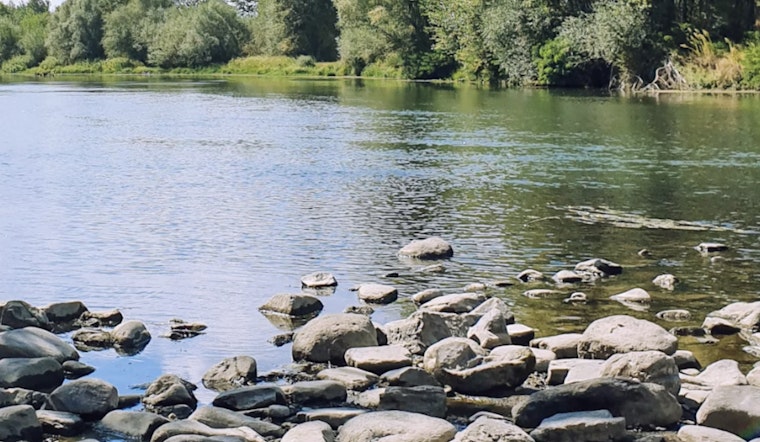
Young Chinook salmon trying to grow up in the Lower Fraser River estuary are swimming in what researchers bluntly call a “chemical cocktail,” a mix of prescription drugs, personal care products and industrial pollutants. In a new peer reviewed study, scientists found that juvenile fish and the water around them contain hundreds of organic contaminants, ranging from everyday medications and caffeine to trace amounts of cocaine. Researchers say that kind of exposure could make it even harder for Fraser Chinook to recover, a population already under serious pressure across much of its range.
Large screening reveals the scale
Published in Environmental Toxicology and Chemistry, the study used a risk based screening to look for nearly 600 organic compounds across nine chemical classes, sampling water and juvenile fish tissue at five sites in the Lower Fraser estuary. The researchers report testing for 595 contaminants and detecting more than 200 in combined water and tissue samples, with 368 organic compounds measured in juvenile Chinook tissue and 288 detected in water. They found that 16 substances exceeded thresholds considered risky for aquatic life, and another 23 were placed on a watchlist for continued monitoring. The paper frames the work as a prioritization exercise to flag chemicals that now need targeted toxicological follow up.
Researchers warn about mixtures
Lead author Bonnie Lo and co authors told Simon Fraser University that “we’ve shown there’s a mixture of chemicals in the Lower Fraser,” and senior author Tanya Brown cautioned that “we simply don’t yet understand the additive effects of this chemical cocktail.” The SFU release also points to decades of population declines: more than 85 percent of Chinook designatable units across southern British Columbia have been assessed as Endangered or Threatened by COSEWIC, which is why the team argues contaminant exposure has to factor into recovery planning.
Why the food web implications matter
The contamination does not stop at the river. Federal assessments and peer reviewed research show Fraser Chinook supply roughly 80 to 90 percent of the Chinook eaten by Southern Resident killer whales in inland waters during the May to September feeding season, so pollutants that build up in salmon tissue can move straight up the food chain. Those toxic loads would come on top of the whales’ other stressors, including limited prey, vessel disturbance and long lived contaminants, complicating conservation efforts for both salmon and orcas.
Estuary nursery under multiple pressures
Scientists and conservation groups describe the Lower Fraser estuary as a critical nursery, especially for Harrison stock Chinook that arrive there at very small sizes and depend on estuary habitat to grow before heading to the ocean. Reporting by The Cool Down and local partners underscores that chemical exposure is only one of several serious threats, alongside warming waters, pathogens and habitat loss, any of which could cut into juvenile growth and survival during this fragile life stage.
What is next for monitoring and management
The study’s authors are calling for expanded monitoring programs and targeted toxicological work to test whether exposure to the priority chemicals is affecting growth, immune function or survival of juvenile Chinook. They also stress that assessments need to focus on mixtures of contaminants rather than one chemical at a time. According to the SFU release, the project brought together Fisheries and Oceans Canada, Environment and Climate Change Canada and Raincoast Conservation Foundation, and received support from the Government of Canada’s Whales Initiative. The researchers say further field and laboratory studies are already planned to rank risks and inform management decisions.



