

























































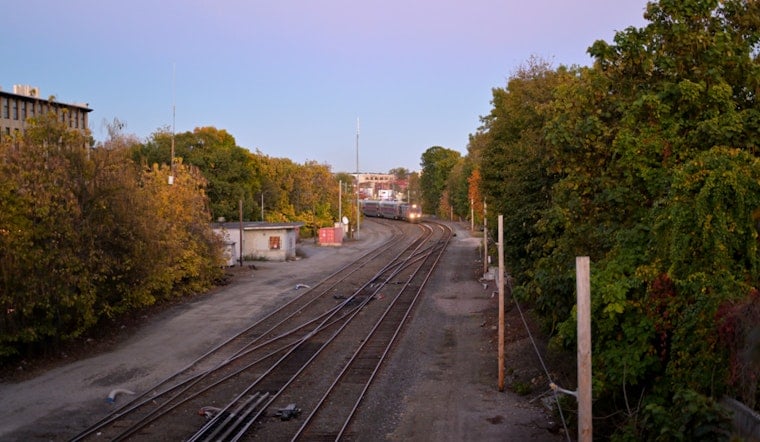
Transit advocates are lining up behind roughly $84 million in tightly targeted track work that they say could make the MBTA's Worcester, Fitchburg and Franklin commuter rail lines feel a lot more like frequent, all-day service. The package, centered on turn tracks, new interlockings and a reworked center island platform, is meant to cut conflicts and shrink headways without waiting for full systemwide electrification. Supporters argue that, if these projects jump the line, several corridors could reach 30-minute service and busy nodes could drop to 15-minute headways.
As first reported by the Worcester Business Journal, the roughly $84 million bundle spells out line-specific investments that advocates say would noticeably improve frequency and reliability. The WBJ breakdown points to ideas ranging from a turn track at Kendal Green to new interlockings and platform changes on the Worcester and Fitchburg corridors.
Kendal Green turn track would unlock 30-minute Fitchburg service
MBTA staff floated the Kendal Green turn track concept to the Boston Region MPO's TIP committee in March 2024, requesting about $14 million in infrastructure work that would support 30-minute weekday service to the inner half of the Fitchburg Line, according to the Boston Region MPO. The idea is presented as a limited, relatively low-cost move that could be paired with schedule tweaks to produce faster, more frequent trips.
Part of a 'no-regrets' plan
The new push builds on an analysis from the MassINC Policy Center and TransitMatters that calls out near-term "no-regrets" capital investments to clear bottlenecks and pave the way for a future Regional Rail network. TransitMatters notes that the full list of unfunded projects comes to about $503 million and that carrying it out over five years would mean roughly $100 million in additional annual commuter rail capital spending.
Worcester and Franklin targets
The Worcester Business Journal's summary highlights specific fixes on the Worcester Line, including a CP44 interlocking and a reconfigured center island platform at Union Station, and reports that a mile-post 16 interlock is already funded and in progress. The WBJ coverage also calls out an estimated $50 million "third phase" on the Franklin Line that advocates say would allow 30-minute service to Foxboro and Forge Park and faster 15-minute service to Walpole once complete, and notes that the MBTA is already putting money into other interlocking upgrades along the Worcester corridor.
What riders would actually get
The MassINC analysis walks through the math for riders: clearing chokepoints and adding carefully placed crossovers or turn tracks can make regular clockface schedules workable, with 30-minute off-peak service across the system and 15-minute headways at the busiest stations. As MassINC lays out, that level of frequency turns commuter rail into an option that works beyond rush hour and helps connect Gateway Cities to jobs and services with more dependable all-day transit.
Funding and next steps
Backers of the report say the concept will need support from lawmakers and buy-in from the MBTA to move from paper to shovels in the ground. The analysis pegs the need at about $100 million in extra commuter rail capital spending per year to deliver the full "no-regrets" package. Individual projects would still have to be scored, ranked and programmed through local MPO TIP processes and the MBTA's capital plan before design and construction can start, a point underscored in both the MPO minutes and the advocacy brief.
Advocates argue that if state leaders and the MBTA give these smaller projects early priority, they could become some of the fastest ways to reduce headways and make the commuter rail network useful to far more people.


