

























































What started as a routine McDonald’s run in Jacksonville Beach has turned into a test case for police use of facial recognition, after a Fort Myers crabber says an algorithm - and the officers who trusted it - wrecked his life for months.
Robert Dillon, a 52-year-old commercial crabber from Fort Myers, says he was wrongfully arrested after an AI facial-recognition search mistakenly tied him to an alleged child-luring incident at a Jacksonville Beach McDonald’s on November 2, 2023. Dillon and the ACLU filed a federal lawsuit on June 10, 2026, alleging investigators treated a 93 percent similarity score from a statewide database as a near-certain identification. He says he was arrested at his home, held overnight, forced to post bond and prosecuted for months before charges were ultimately dropped.
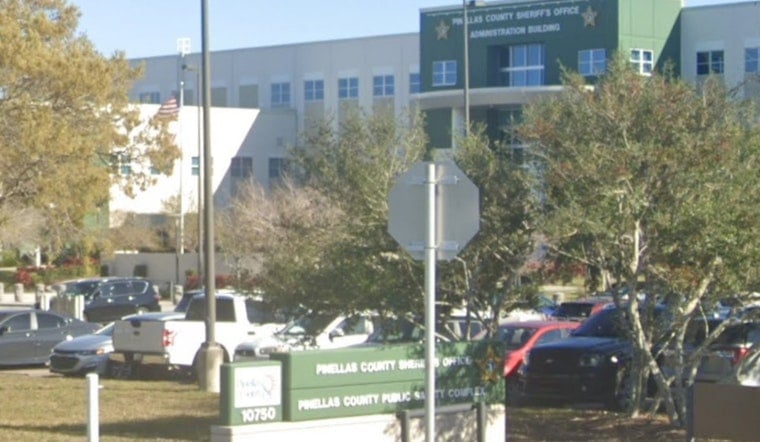
According to a complaint filed in federal court and posted by CourtListener, investigators ran low-resolution surveillance images through the Pinellas County Sheriff’s Office-operated Face Analysis Comparison & Examination System, known as FACES. The system returned a candidate list that included Dillon with a 93 percent similarity score. The filing says officers did not even use a clean video export from McDonald’s, but instead relied on a cellphone picture of a computer monitor playing the security footage, a shortcut Dillon’s lawyers argue made any match inherently shaky.
The suit names the City of Jacksonville Beach, a Jacksonville Beach corporal, the Jacksonville Sheriff’s Office and Pinellas County Sheriff Bob Gualtieri as defendants.
In a press release, the ACLU said the faulty match “resulted in the wrongful arrest and prosecution of an innocent man,” quoting Dillon as saying, “The night I spent in jail after they arrested me for a crime I did not commit still haunts me to this day.” The organization says Dillon is one of at least 15 people nationwide who have been wrongfully arrested after police leaned on facial-recognition matches. His lawyers argue officers left out key exculpatory details - including license-plate-reader hits and McDonald’s ordering records - when they asked a judge for the warrant.
How Investigators Leaned On The AI Hit
The CourtListener filing says a Jacksonville Sheriff’s Office sergeant described the FACES result as “a 93% match on facial features” before passing it to Jacksonville Beach investigators, framing the algorithmic suggestion as if it were hard science rather than a starting lead.
According to the complaint, the lead detective then treated that score as a near-certain identification and built the case around Dillon instead of testing the software’s guess. The lawsuit says investigators failed to disclose automated license-plate-reader data that showed no trace of Dillon’s vehicles anywhere near Jacksonville Beach. It also says they omitted a phone call in which Dillon flatly denied ever being in the city.
Plaintiffs argue that once officers took the algorithm-flagged image and added it to a photo lineup, the deck was stacked. Putting the computer’s pick in front of witnesses, they contend, predictably tainted the identification that followed and turned a “maybe” into an arrest warrant.
FACES, Its Reach And The Oversight Problem
FACES, the system at the center of the dispute, pulls from tens of millions of driver’s-license and booking photos and is accessible to dozens of law-enforcement agencies across Florida. As Wired has reported, critics have long complained that the database operates with limited auditing and minimal outside oversight, even as its results quietly shape investigations.
The lawsuit does not seek to ban facial recognition outright, but it does push for guardrails. According to the ACLU, Dillon is asking the court to require clear caveats whenever FACES is used, peer review of matches and built-in auditing of searches, so officers are less likely to treat a similarity score as gospel.
What Officials Are Saying - Or Not Saying
The Jacksonville Sheriff’s Office and Pinellas County Sheriff’s Office were contacted for comment. The Jacksonville Sheriff’s Office declined to comment, according to Ars Technica. The City of Jacksonville Beach, meanwhile, told reporters it does not weigh in on pending litigation, as Creative Loafing Tampa reported.
The case was filed in the U.S. District Court for the Middle District of Florida as case no. 2:26-cv-01936. Dillon and the ACLU say they are seeking monetary damages as well as injunctive relief that would change how agencies across Florida deploy facial-recognition tools.
Dillon’s lawsuit joins a growing stack of cases challenging face-recognition-driven arrests and could pressure departments to write stricter rules around AI-assisted identification. For local agencies and residents, the outcome will serve as an early bellwether for whether audits, warnings and new procedures can keep another innocent person from ending up in handcuffs because a computer thought they looked like someone else.





