

























































In the heart of the East Village, a long-in-the-making lifeline for some of New York’s most vulnerable residents is finally open. Freedom Village, a fully accessible supportive-housing complex from Barrier Free Living, has debuted at 270 East 2nd Street with 74 deeply affordable apartments reserved for survivors of domestic violence and older adults who have experienced homelessness. The $54 million development is built around universal access and on-site support, with services designed to help tenants live as independently as possible.
Barrier Free Living celebrated the opening with a ribbon-cutting on June 11, describing Freedom Village as “a permanent housing environment that is welcoming to people of all abilities,” CEO Cynthia Amodeo said in a press release via Barrier Free Living. The nonprofit teamed up with Lettire Construction and Urban Builders Collaborative on the roughly 65,000-square-foot project, which includes community rooms and program areas for on-site services. Project materials also highlight a tenant-operated rooftop garden meant for both recreation and therapeutic programming.
Designed for accessibility and independence
Architect JCJ Architecture created a facade that steps and rotates to pull daylight into each floor and give residents different vantage points on the neighborhood, according to JCJ Architecture. Inside, the design leans hard into universal access, with wider corridors, elevators, and fully accessible apartments so tenants can move through the building without barriers. Shared spaces, including the lobby and multi-purpose rooms, are intended to host programs and services run by Barrier Free Living staff.
State funding and supportive services
State officials say the $54 million development was pieced together with a mix of Low-Income Housing Tax Credit equity and state and city subsidies. That includes about $21.7 million in LIHTC equity and $5.2 million in subsidy from HCR, plus $7.2 million from the Office of Temporary and Disability Assistance through the Homeless Housing and Assistance Program and $15.3 million from the New York City Department of Housing Preservation & Development, according to a statement from Governor Kathy Hochul’s office. Operating funds and rental subsidies flow through the Empire State Supportive Housing Initiative, and the apartments are paired with on-site supportive services administered by Barrier Free Living. Officials say those services will include case management, health-related supports, and counseling tailored to each tenant’s needs.
Where it sits and what it replaces
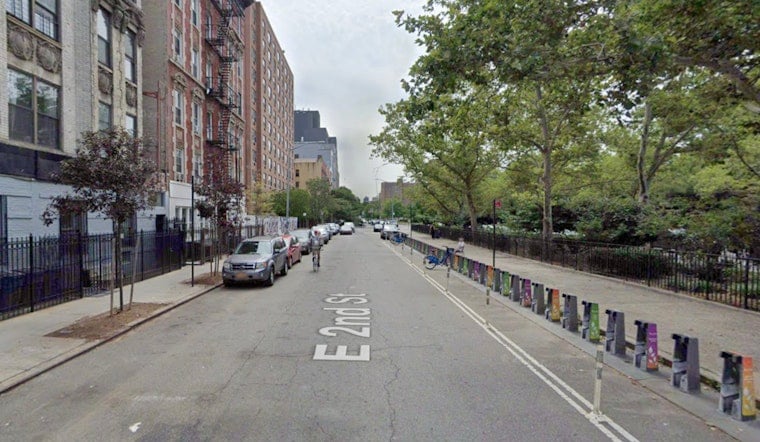
Freedom Village stretches along the block between Avenues C and D in Alphabet City, just off East Houston Street and across from Hamilton Fish Park, replacing a former school that had served as transitional housing for roughly three decades, as reported by New York YIMBY. All 74 apartments are restricted to households earning at or below 30 percent of Area Median Income, one of the deepest affordability tiers offered in many subsidy programs. The closest subway access is the Delancey-Essex Street complex, served by the F, M, J, and Z trains.
Why it matters for accessible housing
Advocates and officials say Freedom Village addresses a rare and stubborn gap: deeply affordable, fully accessible permanent homes that are specifically tailored to survivors of domestic violence and frail older adults. The project also brings Barrier Free Living back to the site where the organization was founded in 1981, according to city and state materials. Governor Kathy Hochul has cast the development as part of a larger push to expand supportive housing under the state’s multi-billion-dollar housing plan, arguing that these homes will help residents rebuild their lives with dignity, according to the governor's announcement. Project leaders add that tying long-term affordability to on-site support services can cut down on emergency shelter use and help residents age in place.



