

























































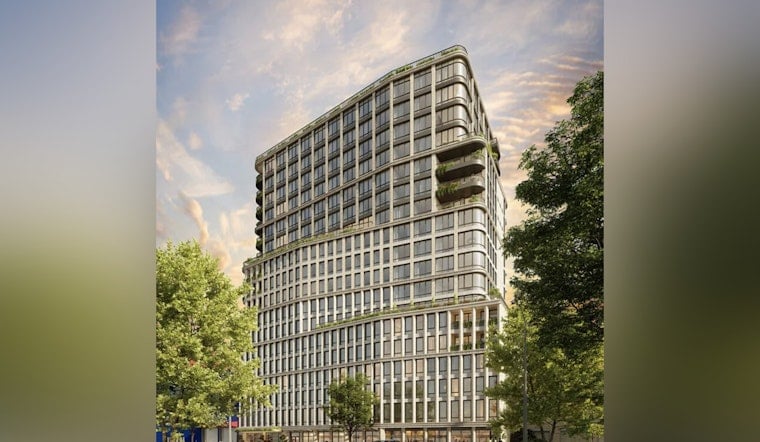
A 2022 bargain that was supposed to lock in 35 percent affordable apartments at two new Atlantic Avenue towers has quietly shrunk, leaving neighbors with far fewer below-market homes than advertised. When the buildings finally opened this year, they were offering closer to 25 percent affordable units instead of the headline 35 percent. Rather than pursue a public showdown over enforcement, neighborhood nonprofits and Councilmember Crystal Hudson’s office accepted a donated lot nearby and shifted promised anti-displacement money to help plan that project, a trade-off that has many tenants and advocates asking what these bespoke rezonings are really worth once the market turns.
What Was Promised
Back in April 2022, developers seeking upzonings at 870–888 Atlantic Avenue and 1034–1042 Atlantic Avenue agreed to set aside roughly 35 percent of their apartments as affordable. On paper, that worked out to about 153 below-market homes out of a projected total of 438 units, hammered out in a last-minute package negotiated by Councilmember Crystal Hudson. The commitment was touted as a way to go beyond the city’s basic Mandatory Inclusionary Housing requirements and secure the Council vote that the projects needed to move forward, according to The Real Deal.
What Opened
Fast forward to this winter, when leasing and Housing Connect lotteries launched for the finished buildings. Instead of the promised 35 percent, the two sites came online with closer to 25 percent affordability, or about 130 below-market apartments out of roughly 517 total units. The affordable pool does include dozens of apartments at lower Area Median Income (AMI) levels. Reporting shows about 97 units in the lowest income band and some one-bedroom rents averaging under $1,000, meaning the income mix shifted even as the overall share of affordable homes slipped, according to City Limits.
How The Deal Changed
Last year, the nonprofits Hudson tapped to help oversee the affordable units, the Fifth Avenue Committee (FAC) and IMPACCT Brooklyn, signed revised agreements with the developer. Instead of pressing to keep the original on-site mix, they accepted a nearby parcel donated by EMP Capital and agreed to redirect $200,000 in previously pledged anti-displacement funds into predevelopment for that new site.
Public records and transaction reports show that EMP Capital acquired 1001 Pacific Street, the property that was later donated to FAC, according to PincusCo. FAC’s own project materials describe plans for 46 or more affordable apartments on the donated lot, as outlined by the Fifth Avenue Committee.
Why Developers Say They Backed Off
Developers told their nonprofit partners that the deeper 35 percent affordability mix no longer penciled out once construction financing tightened. Their explanation landed at the same time debt costs were jumping and lenders were getting choosier. After 2022, the federal funds rate climbed quickly, making construction loans more expensive and credit harder to secure, according to data from FRED. Those kinds of shifts can heavily influence per-unit economics and, advocates say, can be the difference between a project that can handle 25 percent affordability and one that stretches to 35 percent.
Legal And Enforcement Wrinkle
One key problem: the 35 percent promise was never fully baked into the city’s binding land-use approvals. Instead, it lived in cooperation agreements and nonprofit commitments, which have far less legal bite. Hudson herself flagged that weakness once the deal started to unravel. “The news of a breached agreement is a disappointing development that shows the limitations of existing legal mechanisms to secure additional affordable housing beyond current requirements,” she told City Limits.
That gap matters because the city’s Mandatory Inclusionary Housing rules and the Atlantic Avenue Mixed-Use Plan set the official boundaries for what can be required as part of a rezoning. Those documents outline pathways to deeper affordability but also make clear where the legal levers run thin, according to the Department of City Planning.
What’s Next For Tenants And The Neighborhood
FAC and IMPACCT say they intend to move ahead with an all-affordable project at 1001 Pacific Street using the donated land. FAC’s project description notes that the property was conveyed in October 2025 and that the timeline now depends on securing additional predevelopment subsidies and approvals to move from feasibility work into actual construction, per the Fifth Avenue Committee.
For now, the land gift and planned nonprofit building function as a partial patch for the lost on-site affordable units. Housing advocates, though, warn that swapping out hard, enforceable commitments inside private developments for off-site promises is a risky habit. The project documents are publicly available, and the underlying transaction file is also on record, according to PincusCo, but neighbors are left with a familiar Brooklyn story: once the cranes come down, it gets a lot harder to collect on political promises.



