

























































Spot a gun, make a stop, search the person. That long-standing play in Baltimore policing just hit a wall.
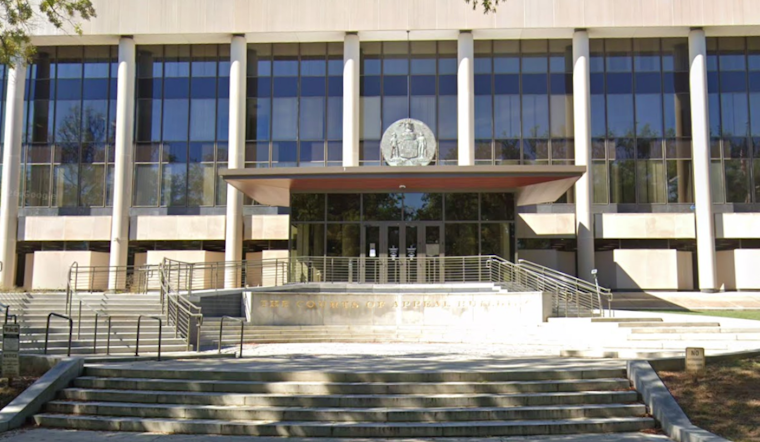
Maryland’s Appellate Court ruled this week that officers may not detain or search someone solely because they see a handgun, tossing out a Baltimore stop and declaring the resulting frisk unconstitutional. The full court, sitting en banc, reworked the state’s reasonable-suspicion standard in light of the U.S. Supreme Court’s 2022 Bruen decision on public carry. The ruling cuts off one of the most common justifications for street stops and is expected to force retraining and policy changes across Maryland police departments.
What the court said
In an opinion filed June 4, Judge Kathryn Graeff wrote that, after Bruen, “Without a presumption of illegality, mere possession of a handgun is not, by itself, indicative of criminal activity that justifies an investigatory stop,” according to the Appellate Court of Maryland.
The opinion applies the U.S. Supreme Court’s Bruen framework and holds that officers must have individualized reasonable suspicion that the person’s possession is unlawful or that some other crime is underway before making a Terry stop. The court underscored that it was dismantling a decades-old approach in which visible gun possession could be treated as inherently suspicious.
Case details
The ruling stems from a July 5, 2023, encounter in northwest Baltimore, where officers said they saw the outline of a handgun “printing” through a man’s shirt and moved in to detain him, as reported by The Daily Record. Police frisked Steven Hicks, searched a satchel, and recovered a second firearm along with suspected cocaine. Hicks later entered a conditional guilty plea and received a five-year sentence, according to the court record and reporting.
The Appellate Court reversed the circuit court’s decision denying Hicks’ motion to suppress all evidence from that search, ruling that the stop and ensuing frisk could not be justified solely by the sight of a gun.
Limits on frisks and searches
The opinion draws a careful line. If officers have lawfully stopped someone and reasonably fear for their safety, they can still perform a frisk. But the court stressed that frisk is limited to a pat-down of outer clothing unless officers can point to extra facts that justify going into pockets, waistbands, or bags.
In Hicks’ case, the court concluded that officers went too far when they reached into his satchel and pockets without testimony or factual support to bring the search under plain-view or plain-feel exceptions. Three judges, Stuart Berger, Daniel Friedman, and Melanie Shaw, filed a concurring opinion to emphasize that the frisk itself violated Fourth Amendment limits.
Reaction from police and prosecutors
Police leaders are already bracing for change, acknowledging that officers will have to adjust both how they conduct stops and how they explain them in reports and in court. The Maryland Chiefs and Sheriffs associations, along with the Baltimore Police Department, are reviewing the decision, and Baltimore Police spokeswoman Lindsey Eldridge said the agency is consulting with city lawyers, as reported by The Baltimore Banner.
Baltimore State’s Attorney Ivan Bates called the ruling “substantial” and said prosecutors will work with police to make sure they rely on multiple articulable factors when they claim reasonable suspicion.
What happens next
The Maryland Attorney General’s Office, which oversees state appeals, is reviewing the opinion to decide its next move, a spokesperson told The Daily Record. Because the decision came from the Appellate Court sitting en banc, the state may ask the Supreme Court of Maryland to take a look or consider other litigation options, although no new filings have been announced.
For now, defense attorneys and civil-rights advocates are treating the ruling as a meaningful curb on stops that fall heaviest on heavily policed neighborhoods.
Why it matters
Maryland Public Defender Natasha Dartigue said the decision protects all Marylanders and argued that exercising a constitutional right cannot, by itself, justify a police stop, as reported by The Baltimore Banner.
How much day-to-day policing changes will depend on how quickly departments update training and how higher courts respond if the case is appealed. For Baltimore residents, the ruling closes off one of the most frequently cited reasons for street stops while preserving room for officers to intervene when they can clearly point to specific, articulable illegal conduct.





