

























































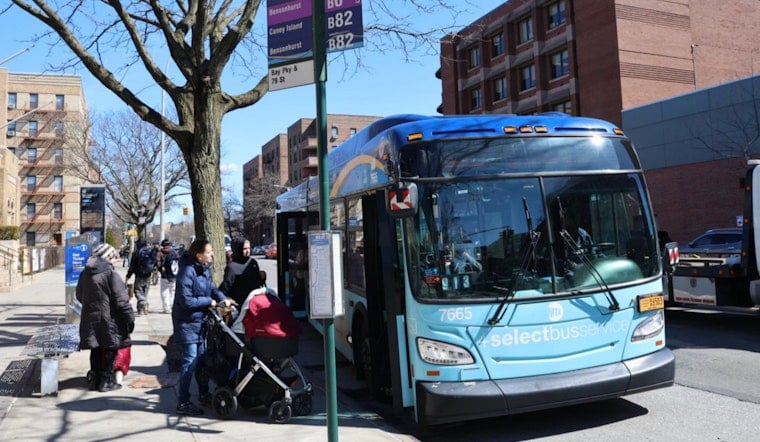
New York City’s Department of Transportation has rolled out what it calls a final proposal to carve out bus lanes along nearly the full stretch of Bay Parkway and parts of Cropsey Avenue, promising faster, more reliable service for riders traveling between Borough Park and Bath Beach. The redesign pairs offset and curbside bus lanes with new pedestrian islands, left-turn lanes and curb-management changes aimed at cutting down double parking and the crawl-level bus speeds locals love to complain about.
At a June 10 presentation to Brooklyn Community Board 11, DOT detailed a plan for offset and curbside bus lanes on Bay Parkway from Avenue J to Shore Parkway and on Cropsey Avenue from Bay Parkway to 26th Avenue, covering the corridor used by the B6 and B82. According to NYC DOT, the agency says the changes would increase speed and reliability for riders within the project area.
Merchants And Riders Worry About Parking
That promise did not quiet everyone in the room. At the CB11 briefing, business owners and residents pressed DOT on where the city would take curb space for bus lanes and how deliveries are supposed to happen if trucks cannot pull up as freely. As reported by World Journal, merchants asked the agency to add loading zones, retime meters and protect nearby parking where possible, trying to make sure the plan does not turn into a daily headache for customers and delivery drivers.
Why DOT Says It Must Act Now
DOT's presentation notes the corridor serves roughly 35,000 daily bus riders within the project area, and that buses on Bay Parkway can slow to about 3 miles per hour during the worst congestion, which is barely faster than a distracted walk and makes for long, unreliable commutes. The packet also flags safety: DOT identified the stretch as a Vision Zero priority corridor where 30 people were killed or seriously injured from 2021 through 2025, including two deaths in 2025. To address that, it recommends a mix of left-turn lanes and restrictions to reduce conflicts at intersections.
All of those figures and recommendations come from the agency’s project packet, and DOT says it will use prior studies to guide which left-turn restrictions and turn-lane treatments to deploy. According to NYC DOT, the presentation also outlines outreach and implementation steps for later in 2026.
Design Tradeoffs: Lanes, Islands And Loading Zones
The final proposal sketches offset lanes through many blocks, curbside lanes where left-turn bays are needed, new left-turn lanes at 14 high-demand intersections and up to 18 pedestrian median islands and extensions. DOT told the board it would retime meters, install neighborhood and truck loading zones to preserve daytime deliveries and keep most parking by favoring offset bus lanes where possible. Neighbors, however, say they want firmer guarantees before crews put paint on the pavement, a concern World Journal reported during the CB11 session.
Next Steps
DOT’s packet describes further outreach and refinement this month, with on-street work and monitoring slated for later in 2026 as the agency finalizes designs and coordinates with overlapping capital projects. Community Board 11 will continue to host DOT briefings as the department refines the plan and works on signal timing, curb changes and loading-zone placement. For upcoming meetings and livestream links, see the board calendar at Brooklyn Community Board 11.





