

























































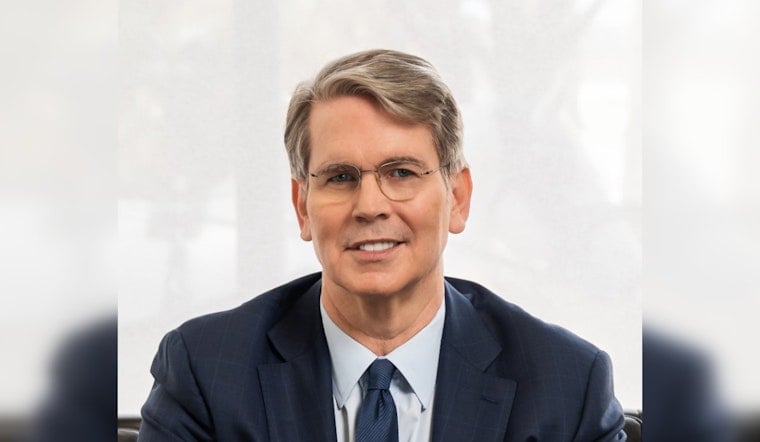
Treasury Secretary Scott Bessent turned a New York gala dinner this week into a foreign-economic-policy wake-up call, rolling out a sweeping "economic statecraft" framework that directly links U.S. trade policy, global supply chains and financial tools to national security. He warned that access to the American market will no longer be unconditional and said the United States will demand reciprocity from trading partners. The plan singles out semiconductors, artificial intelligence, quantum computing, advanced manufacturing and pharmaceuticals as priority sectors the U.S. must lead.
In prepared remarks, Bessent organized the strategy around five core principles, from "national capacity" to reciprocity, rule-making for emerging technologies, disciplined use of sanctions and a focus on linking national power to household prosperity, according to the U.S. Department of the Treasury. The transcript frames economic security as beginning with the capacity to build at home and urges diversifying away from foreign chokepoints. Treasury described sanctions as tools that must be paired with diplomacy, intelligence and compliance to be effective.
Reciprocity, supply chains and the dollar
Tampa Free Press reported that Bessent warned countries cannot expect open access to U.S. consumers, capital and the dollar while shutting out American technology or forcing intellectual-property transfer, and that access to the American market will require strict reciprocity. He told the Economic Club that partners should "expect clarity" and adversaries should "expect resolve." Those comments make clear Washington intends to use both market access and financial leverage to press trading partners.
What it means for tech, finance and markets
Analysts say the speech amounts to a formal tilt toward industrial policy that could increase pressure for tariffs, reshoring and tougher investment screens, and Axios captured that shift as "Trumponomics 2.0" in its coverage. The Peterson Institute for International Economics cautions that elevating dollar leverage and politicizing swap-line decisions can complicate Fed independence and may encourage allies to "de-risk" their dollar exposure, producing trade-offs for U.S. influence. Investors and corporate supply-chain planners will watch whether those trade-offs produce new costs for imported goods or new incentives to build plants in the U.S.
Legal and policy tools
Bessent said sanctions must be "targeted, enforceable, and connected to strategy," and he urged pairing enforcement with diplomacy and intelligence, language echoed in the Treasury transcript. He also said the United States intends to "write the rules" for digital assets, tokenization and stablecoins, a push that could accelerate rulemaking and prompt cross-agency coordination on fintech and payments. That combination of trade, regulatory and financial tools signals an integrated approach to protecting U.S. strategic industries.
What to watch next
Expect formal proposals in upcoming trade talks, potential tariff or investment-screening actions and rulemaking around stablecoins and payment rails, and Fox Business notes Bessent laid out five principles that could shape policy in the months ahead. Capitol Hill reaction and allied coordination will determine whether "reciprocity" becomes a negotiating stance or a new litmus test for market access. Markets will be closely attuned to specific policy texts and to how Treasury coordinates with the Fed and international partners.
For workers and manufacturers at home, the administration frames this as a bid to reconnect national strength with household prosperity, though observers warn it may raise prices or provoke retaliation abroad, as Tampa Free Press reported. The next few rulemakings and trade negotiations will show whether "economic statecraft" is mostly rhetoric or a blueprint for long-term change.





