

























































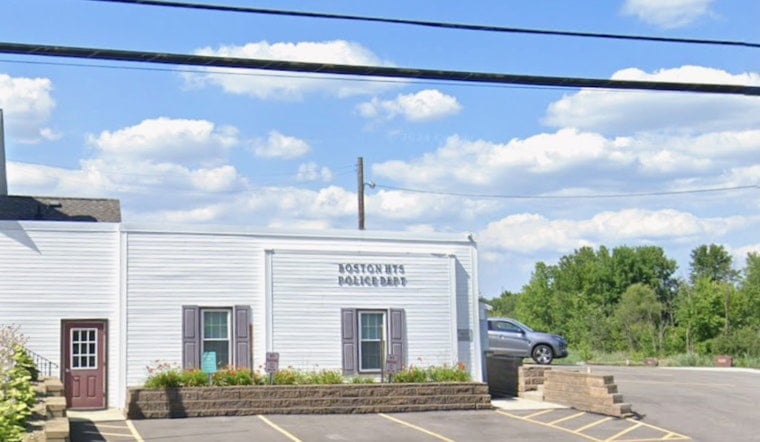
Boston Heights village leaders are gearing up to ask residents for a quarter-percent payroll tax hike to help bankroll a new combined public safety center with a price tag of about $9.8 million. The plan, pitched as a way to replace the village’s century-old police space and modernize aging fire facilities, drew a packed crowd at a recent public meeting where officials and neighbors traded questions, worries, and a few pointed opinions.
If voters sign off, the measure would add 0.25 percentage points to the municipal income tax, taking the rate from 2% to 2.25% for people who work inside the village, according to Cleveland.com. The village currently levies a 2% municipal income tax, per the Regional Income Tax Agency. In everyday terms, a worker earning $50,000 a year would pay about $125 more annually under the increase.
Village officials say they have already lined up a mix of federal and local support and are counting that money toward the project. The village's website documents a May 26 presentation by Rep. Emilia Sykes, and Sykes' office previously submitted a $1.5 million community-project funding request for the safety center while the village celebrated an $850,000 ceremonial award in late May, according to the Village of Boston Heights and Rep. Emilia Sykes. Local leaders say combining police and fire on one site would tighten coordination between the two departments.
What the safety center would include
Draft plans shared with the council call for a combined police-fire facility that would also carve out dedicated village-hall space and expand court and conference rooms. The council's agenda packet shows the project could more than double on-site parking and leave enough room in the footprint for a community room, a tornado shelter, or a small retail space, depending on how the final bids come back. The same documents identify roughly $450,000 to $500,000 in firehouse renovations as part of the overall project.
Council pitch and public reaction
Council leaders framed the center as a way to keep public safety services under local control rather than merge with neighboring communities. Council President Dave Maccarone emphasized the village’s interest in preserving its independence, and Councilmember Richard Lyon urged residents to keep weighing in as the proposal moves forward, as reported by Cleveland.com. Residents at the meeting offered mixed reactions, with some warning about long-term costs and others arguing that modern facilities are worth the investment.
State pressure and the backdrop
Village officials say broader state policy shifts are adding pressure to show that Boston Heights can sustainably provide basic services. Ohio House Bill 331 would set up a process to assess whether villages are delivering core functions such as public safety and road maintenance, a move that some local advocates say is pushing communities to shore up their facilities. Analysis from the Buckeye Institute and the Ohio Legislature outlines the bill’s aim to review village capacity to provide essential services.
Budget, timeline and the ballot
Council materials list a revised project cost of about $9.8 million and identify roughly $5.8 million from grants and the general fund, leaving a funding gap that the payroll tax is designed to help close if voters approve it. According to meeting documents, officials plan to release bid packages to contractors in October and are targeting a 2027 groundbreaking. The draft payroll-tax measure currently has no built-in end date, though council members say a 10-year duration is under discussion.
What voters need to know
The payroll tax would apply to people who work inside Boston Heights and would be collected through standard employer withholding, in line with municipal income-tax practices summarized by RITA. Put simply, a 0.25% increase on $50,000 in wages comes out to about $125 a year, or roughly $2.40 a week, an example officials have used to show the scale of the change.
Next steps include finalizing the ballot language, publishing full cost and design details, and scheduling the vote under standard public-notice rules. Residents can track the council calendar and review meeting packets on the village website to keep up with key dates and new documents as they are posted.



