

























































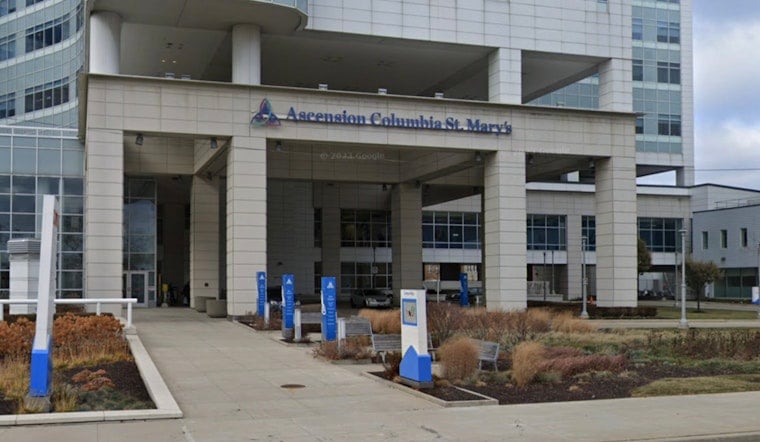
Editor's Note: This article has been updated to clarify details about the elevator outage and the accommodations provided during the repair period.
For months, anyone parking at Ascension Columbia St. Mary’s Hospital in Milwaukee’s attached garage encountered an unexpected obstacle. With two of the garage’s four elevators out of commission, visitors relying on those specific lifts were left hauling themselves up stairwells or winding through the main hospital just to reach appointments. Patients in wheelchairs, parents wrangling strollers and staff pushing heavy equipment all found routine trips suddenly a lot more complicated at one of the city’s busiest medical campuses. Local reporting indicates the outage dragged on for roughly six months, turning an accessibility problem into a long-running headache.
Ascension posted guidance for guests on its hospital tour registration site. The page warns, “Parking Structure elevators are out of service,” and tells people to use the stairs and the main hospital elevators instead. According to Ascension, the same notice also cautions that the west elevators are for staff only and do not lead to public areas. The hospital also deployed on-site security personnel to assist guests in the garage and made accessible parking spaces available on all five levels, including spots near the functioning elevators on the west side.
Who It Hurt
When elevators that connect parking to a hospital entrance go dark, the impact is not just an inconvenience. People who rely on vertical access can find themselves effectively cut off from routine care, appointments and visits. The 2010 ADA Standards require an accessible route from parking and loading zones to facility entrances, which is why extended outages in hospital garages raise compliance and equity questions.
Security concerns have also been on the radar. Local coverage has flagged problems in the same structure, with WISN reporting violent attacks and a pattern of car break-ins in the garage in recent years.
What The Journal Sentinel Found
Reporting by the Milwaukee Journal Sentinel lays out a detailed timeline that puts the elevator outage at roughly six months. The investigation found that repair efforts stretched across multiple technician visits, with delays attributed in part to the need to await replacement parts from contractors and additional complications that required specialized engineering.
The Journal Sentinel also cited a reader account raising pointed questions about why it took so long to restore service on a campus that sees a steady stream of patients, newborns and visitors every day.
Legal And Accessibility Questions
When elevators are down for weeks or months, hospitals are expected to step in with temporary accommodations for anyone who cannot use stairs. That kind of disruption does more than frustrate people, it raises regulatory and equity issues for facilities that are supposed to be open to the public.
The 2010 ADA Standards spell out how accessible routes are supposed to function. Long-term interruptions typically call for clear alternatives, visible information and documented help for patients and staff. Disability advocates say hospitals should be able to show what they offered instead, whether that means escorts, alternate shuttles or posted timelines and directions, whenever the usual vertical access is unavailable.
The Columbia St. Mary’s elevator saga is a relatively small but telling example of how delayed repairs and deferred maintenance can echo through patient experience and campus safety. For readers who want the full play-by-play and documentation, the Milwaukee Journal Sentinel Public Investigator report breaks down the complete timeline.





