

























































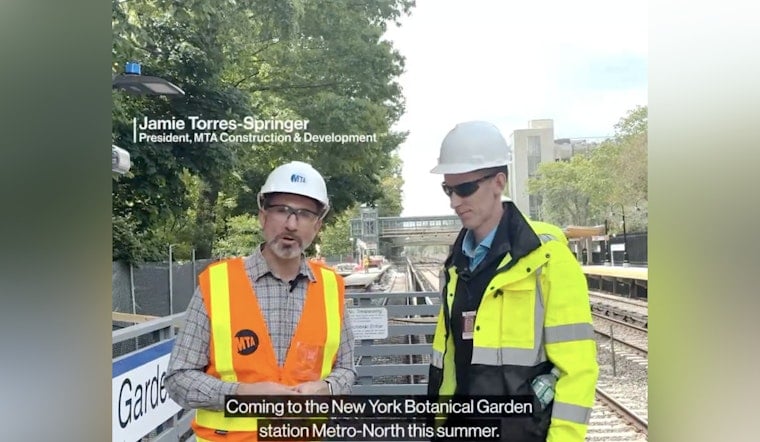
The MTA is rolling out a major rebuild at three Bronx Metro‑North stations, giving Botanical Garden, Williams Bridge and Woodlawn what the agency calls the most dramatic upgrades they have seen in decades. Riders along the Harlem Line can expect new elevators, rebuilt platforms, restored station features and other accessibility improvements, with the MTA targeting completion in 2027 and pledging to keep trains running while the work is underway.
We're giving the Botanical Garden, Williams Bridge, and Woodlawn Metro-North stations the most dramatic improvements they have in decades. Next year Metro‑North riders will have three fully transformed stations in the Bronx. We're keeping service running using temporary platforms. Work on the Manhattan‑bound side is finished and crews have switched to the northbound direction. https://x.com/i/status/2065095500261478822
— MTA Newsroom (@MTANewsroom) June 11, 2026
What the MTA Is Building
In a press release, the MTA laid out a soup‑to‑nuts rebuild for Williams Bridge and Woodlawn. Each station will get two new elevators, brand‑new platforms with internal snow‑melting systems, replaced foundations and full stairway replacements. Botanical Garden’s makeover is a little more surgical but still substantial, with renewed station elements, replacement of both elevators, structural platform repairs and restoration of the historic wood canopy, along with new ADA‑compliant ramps and canopy shelter work.
The agency says utility relocation is already underway at Woodlawn, and that construction will be phased so platforms remain boardable even while crews are tearing things up and putting them back together.
Timeline and Current Status
In its capital‑program materials, the MTA lists the trio of projects as “targeted for 2027.” Officials say that deadline is achievable through phased construction and coordinated utility work, folded into the broader capital plan rather than treated as a one‑off upgrade.
The MTA Newsroom’s post on X notes that crews have already wrapped work on the Manhattan‑bound side and have shifted to the northbound platforms for the next phase. Planning documents and the agency’s public rollout say riders can bank on a mix of partial platform closures, temporary platforms and ramps, with longer track outages scheduled only when necessary to keep trains moving as much as possible.
What This Means for Riders
Local leaders are pitching the project as a long‑overdue fix for Bronx Metro‑North riders who have been waiting for more reliable and accessible stations. The Bronx Times reported that elected officials see the new elevators at Woodlawn and Williams Bridge in particular as key to opening up access to jobs, schools and the New York Botanical Garden.
In the short term, riders should brace for some inconvenience. Phased platform closures and temporary staircases or ramps will pop up as work shifts from one side to the other. City and MTA officials, though, say the plan is to minimize the pain and keep at least one platform usable at each station throughout construction.
An Upgrade in a Wider Plan
Industry coverage places the Bronx upgrades inside Metro‑North’s 2025–2029 capital commitments and describes a broader push to speed up station rebuilds and accessibility work across the network, according to Progressive Railroading. Observers say the MTA is leaning on phased construction and collaborative delivery methods to shorten schedules and control costs, while still growing access for Bronx riders who rely on Metro‑North every day.





