

























































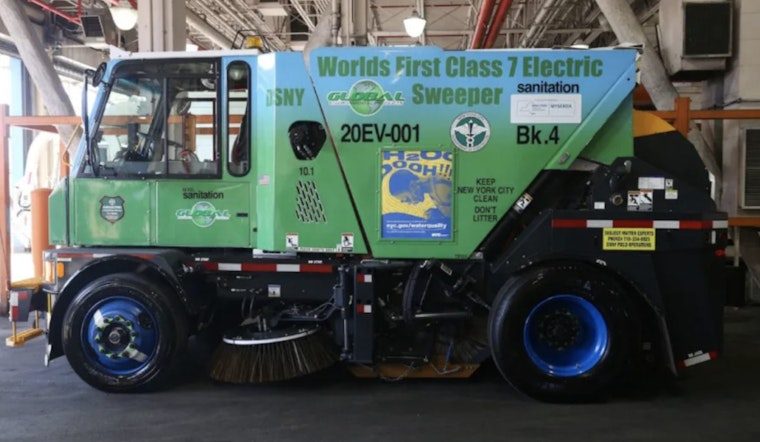
New Yorkers who like to roll the dice on alternate-side parking may soon be out of luck. The State Senate has approved legislation that would let the New York City Department of Sanitation mount cameras on street sweepers and automatically issue alternate-side parking notices to vehicle owners. DSNY Commissioner Gregory Anderson called the vote “a win and a step closer to keeping neighborhoods clean,” noting that nearly 500,000 car owners skirt street-cleaning rules each week and keep crews from clearing thousands of curb miles. The measure, S.1891A, now heads to the State Assembly before any city pilot can get rolling.
What the Senate approved
The bill language authorizes a city demonstration program that would empower DSNY to install outward-facing camera devices on sweepers and send notices of liability to vehicle owners, according to News12 Brooklyn. DSNY has said the cameras are aimed at chronic violators who repeatedly block sweepers from the curb. Supporters argue the automated notices would back up on-the-street enforcement and finally let crews clean routes that are currently impossible to reach because cars never move.
How enforcement would work
Under the bill text posted by the New York State Senate, camera-equipped sweepers would record images of vehicles parked during posted street-cleaning hours, and those images would become the basis for notices of liability to the registered owner. The measure limits the use of images to adjudicating violations, requires devices to perform daily self-tests, and orders that recordings be destroyed once a case is resolved or one year after a notice is issued, whichever comes first. It caps civil penalties at $50 per violation, allows an additional charge of up to $25 for failing to respond, and builds in a 60-day warning period before any fines can be assessed.
Local backing and safeguards
The City Council has already signed off on a home-rule request urging Albany to authorize the change and has outlined specific safeguards, including visible signage on sweepers, upgraded street signs on routes in the pilot, and public reporting, in a City Council resolution. The resolution and sponsor memo point out that DSNY typically sends out about 200 mechanical brooms on a weekday and cleans more than 6,000 curb miles, arguing that automated enforcement could help reach sections that manual ticketing routinely misses. Council members have also called for DSNY to report back on costs, revenue, and adjudication outcomes if a pilot program launches.
Next steps in Albany
The Assembly still has to act on a companion bill, filed as A.4523. The proposal is currently in committee and must clear that step before heading to the governor, according to LegiScan. If the bill becomes law, the statute is set to take effect one year after the governor signs, giving the city time to install equipment, update signage, and finalize an adjudication process.
Legal implications
S.1891A would establish owner liability for street-cleaning violations captured by sweeper cameras while explicitly classifying that liability as administrative, not criminal. It also tightens public access to recorded images and sets out procedures for owners to inspect the evidence, according to the text posted by the New York State Senate. The bill includes a specific defense when the devices malfunction and provides that a technician’s certificate based on the images serves as prima facie evidence in administrative hearings.
For drivers, that likely translates into a grace period filled with warning letters, followed by automated notices on whichever routes the city chooses for the pilot. For city officials, the Senate vote inches a long-discussed enforcement tool closer to the curb. Updates will hinge on what the Assembly does next and how the mayoral administration chooses to roll out any eventual program.



