

























































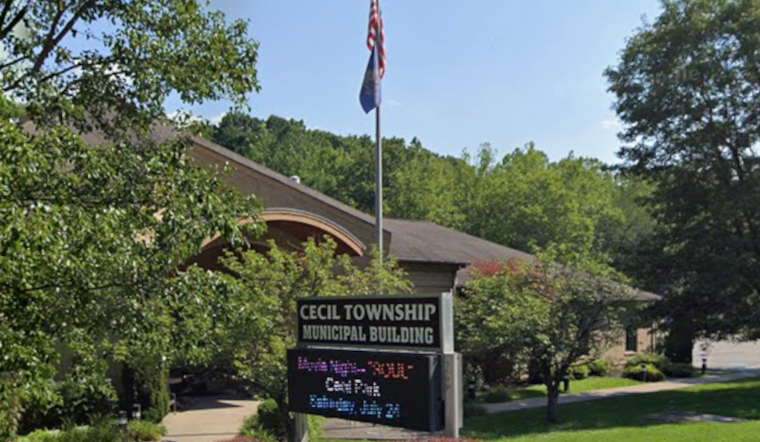
State inspectors say a troubled oil well in Cecil Township is still leaking more than two and a half years after it first landed on regulators’ radar, with no visible cleanup in sight.
When Pennsylvania Department of Environmental Protection staff returned to the McCown 1 conventional oil well on June 11, 2026, they reported that contaminated groundwater still had not been addressed after roughly 936 days. Their latest visit flagged the same problems as before: corroded production and wastewater tanks and discolored pooled water near the pump jack on a rural Washington County property.
What inspectors saw
During the June 11 inspection, DEP recorded a soil conductivity reading of 12.34 mS at the base of a larger metal production tank and photographed standing wastewater inside a corroded containment area, according to PA Environment Digest, which reviewed the agency’s inspection report.
DEP’s write-up stated that it "Appears a release of production fluids [contaminated groundwater from the well] has migrated into a nearby" pool of water, and the inspection directed the operator to assess the entire well site for leaks and spills. In other words, regulators are telling the owner to stop looking the other way and start looking everywhere.
A long-running problem
The well, listed to the C C Wharton Estate, was first inspected after a citizen complaint on Nov. 17, 2023. Violations were reissued on May 13, 2025, and the site was last formally inspected that same day, according to the record.
"The Department has not been able to contact the operator and has not received any response from the previous inspections," inspectors wrote, and DEP requested a written response by June 30, 2026, per PA Environment Digest. That timeline points to a release that has lingered for more than two years without visible corrective work.
Why it matters in Washington County
Cecil Township and the rest of Washington County already have a history with oil and gas contamination and DEP enforcement, as documented in the Pennsylvania Bulletin and other public records. Earlier cases show how leaks from corroded tanks and storage at conventional well sites can hang around and ultimately reach surface water and groundwater if they are not cleaned up.
Residents who want to dig into the details can use DEP’s public compliance tools to pull up inspection logs and enforcement history for this well and others in the area.
What happens next
DEP has ordered the operator to respond in writing by June 30, 2026. If that response never shows up or falls short, the agency can escalate enforcement under state oil and gas rules, including formal orders and civil penalties.
Community members who suspect contamination can file complaints through DEP’s environmental reporting channels, then keep tabs on follow-up using the department’s online compliance portals. For broad searches of inspection records, residents can turn to DEP’s Compliance Reporting Database.
Legal implications
Because DEP has continued violations at McCown 1 across multiple inspections, the agency has statutory authority to pursue enforcement if corrective work remains unfinished. That toolbox ranges from notices of violation to consent orders and monetary penalties.
Past DEP actions in the oil and gas sector have resulted in orders and fines when operators did not remediate releases, and unresolved wastewater problems like the one documented at McCown 1 typically trigger stepped-up enforcement until the site is stabilized and cleaned up.





