

























































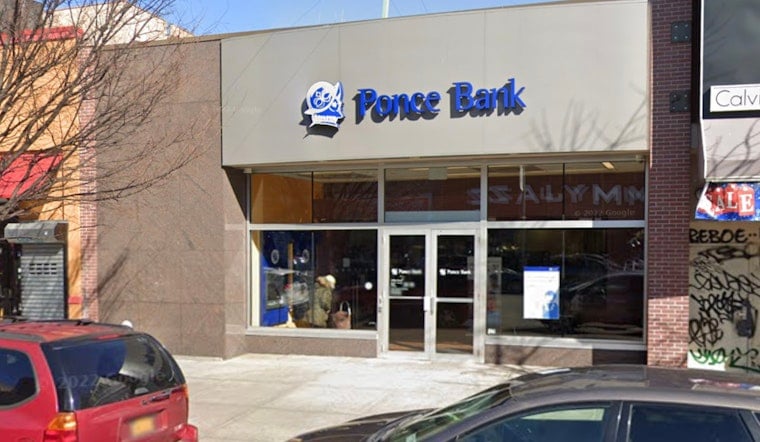
City Hall is steering $20 million in municipal deposits into Ponce Bank branches in Inwood and the Bronx, with Mayor Zohran Kwame Mamdani pitching the move as a fast way to boost lending in neighborhoods that have historically struggled to get credit. The deposits go to a community bank that traces its origin to the Bronx in the 1960s, when Puerto Rican migrants started the institution after big banks pulled out of the borough. Officials say the fresh cash is meant to immediately expand Ponce’s capacity to make small-business and home loans in those communities.
The plan surfaced publicly in a post on X, where Mamdani said the action was taken alongside the city comptroller and the Department of Finance. According to the post, the city will place the $20 million in Ponce’s Inwood and Bronx branches to widen access to credit for working families and small businesses. City officials have not yet said how quickly those deposits are expected to turn into loans on the ground.
How the Deposit Ties to the State's BDD Program
According to Ponce Financial Group's 10-Q, the bank has been an active participant in New York’s Banking Development District (BDD) program and has taken in sizable deposits through it in recent years. The filing notes that the Westchester Avenue branch in the Bronx was approved as a BDD and that Ponce received $35 million of program deposits on July 30, 2024, plus a $10 million Department of Finance deposit on June 24, 2025, bringing that program total to $45 million. It also reports an additional $35 million of program deposits for the Inwood location in April 2026. The filing describes those deposits as a way to expand Ponce’s deposit base and support local lending capacity.
State Approvals and What a BDD Does
The New York State Department of Financial Services maintains a public list of approved Banking Development Districts that includes Ponce Bank’s Westchester Avenue location and the Inwood branch, which was approved on Feb. 4, 2026. The agency defines the BDD program as a tool to encourage branches in areas with limited access to banking services. The DFS materials explain that approved BDD branches can receive a mix of subsidized and market-rate deposits intended to nudge banks and credit unions to open or keep locations in underserved neighborhoods. That state designation is the mechanism that allows municipalities and public agencies to route deposits into mission-focused institutions like Ponce.
Ponce Bank's Origins and Local Mission
Ponce Bank says it was founded in the Bronx in 1960 by Puerto Rican migrants who wanted a bank that would keep capital and services circulating in the neighborhood after larger institutions decided to leave. The bank presents itself as a minority-owned community lender focused on small businesses and homebuyers, and its regulatory filings show management promoting program deposits as fuel for on-the-ground lending. For residents in Inwood and Castle Hill, that is meant to translate into more local loan capacity and banking services that stay rooted in the neighborhood rather than flowing out of it.
How the City Picks Deposit Banks
The city’s Banking Commission, made up of the mayor, the finance commissioner and the comptroller, has authority under Section 1524 of the New York City Charter to designate which banks can hold municipal deposits. The Commission’s presentation outlines the criteria it uses to evaluate candidates. Those materials highlight capital strength, branch presence in low-income communities and other financial metrics when designations are considered. The rules give city officials a formal way to steer public cash toward banks that commit to serving underserved neighborhoods, rather than parking funds wherever Wall Street tells them to.
What's Next
Ponce Financial’s filings show the company was categorized as well-capitalized at its most recent reporting, a status that typically allows a bank to use added deposits to back more commercial and consumer lending. Neither the city nor Ponce Bank has released a detailed lending schedule tied specifically to this $20 million placement, and both say that program specifics and loan products will be rolled out in the coming weeks. If the deposits are deployed as officials describe, the move will serve as another municipal effort to channel public dollars into neighborhood banking capacity rather than leaving communities to fend for themselves in the credit market.





