

























































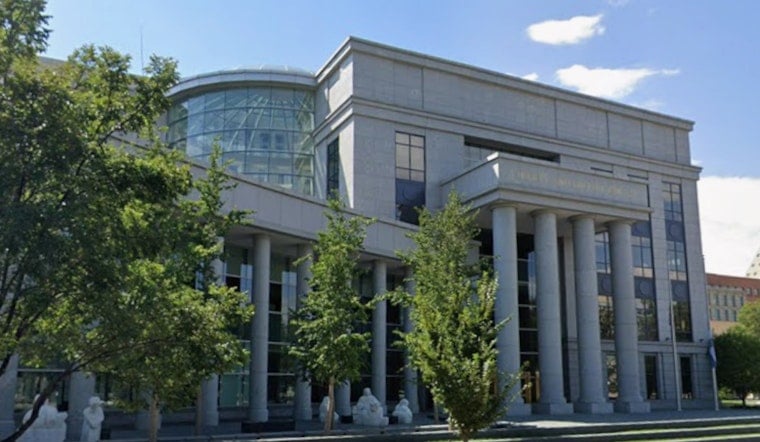
Colorado’s highest court has put some guardrails around when employers can fire workers who defend themselves on the job, siding with an employee whose late-night shift at a Circle K turned into a confrontation with a knife-wielding customer.
In a ruling issued Monday, the Colorado Supreme Court said employees in the state can bring wrongful-termination claims if they are fired after lawfully acting in self-defense at work. The decision stems from a 2020 incident in which a longtime Circle K clerk pushed a man who had come behind the counter holding two knives and then walked out with a pack of cigarettes.
What the Court Decided
The Colorado Supreme Court answered a certified question from a federal judge and held that the state’s statutory and constitutional right to self-defense can support a public-policy exception to at-will employment. In plain English, that means Colorado’s general rule that bosses can fire workers for almost any reason now has a narrow carveout when an employee acts in lawful self-defense during an unprovoked attack at work.
The justices were careful to say the ruling is limited and does not turn every workplace scuffle into a lawsuit. The protection only applies when an employee responds with lawful self-defense to an attack they did not start. “We answer the question in the affirmative and return this case to the district court for further proceedings,” the court wrote, according to the Colorado Judicial Branch.
The Circle K Encounter
According to federal court filings, the clash took place on Oct. 4, 2020. A customer carrying two hunting knives approached the register, demanded cigarettes, and then moved behind the counter even after the clerk told him not to. As he reached for cigarettes, the record says the clerk made contact with his arm. Circle K managers later reviewed surveillance footage and fired her two days after the incident under a company “Don’t Chase or Confront” policy.
Those factual disputes, including whether the clerk’s actions amounted to lawful self-defense and how closely her conduct tracked the store’s rules, are laid out in the federal court record. The state Supreme Court did not settle any of that; it focused only on whether Colorado law even allows a worker in her position to bring a wrongful-termination claim.
How the Case Moved Through the Courts
The federal district court first granted summary judgment to Circle K on the novel legal theory, essentially ruling that Colorado law did not recognize this kind of self-defense-based wrongful-termination claim. On appeal, the U.S. Court of Appeals for the Tenth Circuit vacated that decision and sent the case back so the lower court could decide whether Moreno actually acted in self-defense and whether that was the reason she was fired, according to the Tenth Circuit.
Faced with that task and a still-unclear point of state law, the district judge asked the Colorado Supreme Court to answer a narrow legal question about whether the state’s right to self-defense can undergird a public-policy exception to at-will employment. The state court said yes on Monday, then sent the case back to federal court for the fact-finding phase.
What It Means for Workers and Employers
Moreno’s attorney, Iris Halperin, told reporters the ruling “affects workers statewide immediately” and called it a “huge right” for employees who face violence at work, according to Colorado Public Radio. In other words, workers who fend off unprovoked attacks now have a clearer path to challenge a firing in court, instead of being told that at-will employment ends the conversation.
At the same time, the justices stressed that the exception is narrow. It protects only lawful self-defense in response to an unprovoked attack and does not answer whether an employer’s blanket rule against confronting customers is valid or invalid, according to the Colorado Judicial Branch. Employers can still set strict safety policies. They just may not be entirely shielded from suit if following those policies would have required a worker to stand still and get hurt.
What’s Next
The case now heads back to the U.S. District Court for the District of Colorado, where a judge will have to sort out the disputed facts: Did Moreno act in lawful self-defense, and did Circle K fire her for doing so? If the district court or a jury answers yes to both questions, her wrongful-termination claim can move forward under the newly recognized self-defense exception.
The outcome could ripple beyond this one clerk. If other workers can show they were fired after defending themselves in similar circumstances, the ruling may invite more lawsuits over how far employers can go in punishing employees who fight back during violent incidents. The timing of discovery and future hearings will follow the schedule set out in the federal filings and the state court opinion, according to the federal court record.



