

























































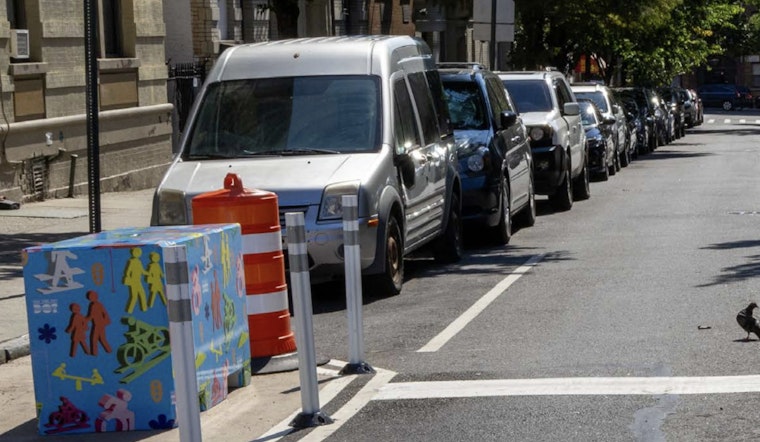
Corner parking in New York City may be headed for a serious crackdown, as the City Council revives a sweeping "daylighting" push just as Mayor Zohran Mamdani backs away from an earlier street-safety pledge.
The new proposal would ban drivers from parking within 20 feet of crosswalks across all five boroughs and would require the Department of Transportation to install hard physical barriers at roughly 1,000 corners a year. Advocates are pressing the Council to lock in about $15 million in this year’s budget for those barriers and for an outreach campaign to tell drivers their corner spots are going away.
Filed as Intro. 1138, the bill would add a new section to the city code that bars standing or parking within 20 feet of a crosswalk and directs DOT to "implement daylighting barriers at a minimum of 1,000 intersections per year," according to City Council records. Multiple co‑sponsors have already signed on, moving the measure into the Council’s hearing schedule and budget oversight machinery.
DOT study clouds universal rollout
A January analysis from NYC DOT complicated the case for a blanket, citywide daylighting mandate. The agency found that hardened daylighting - installations that use things like bollards, planters or bike racks to physically protect the corner - was linked to statistically significant drops in pedestrian injuries.
By contrast, sign‑only daylighting showed no measurable safety benefit. In some analyses, universal daylighting without physical hardening was even associated with higher pedestrian injury rates. DOT urged a situational approach, recommending that daylighting be paired with other street‑safety tools instead of rolled out identically on every block, a conclusion that has fueled the administration’s caution about a one‑size‑fits‑all law, according to NYC DOT.
The money fight
Then there is the price tag. The Council’s finance office pegs the annual cost of hardening 1,000 intersections at about $9.9 million for materials and other non‑personnel expenses. The Mayor’s Office of Management and Budget, looking at the full operational picture, puts the recurring bill closer to $16.7 million once staff and vehicles are added.
DOT officials have told lawmakers that a fully hardened retrofit of every corner citywide could ultimately climb into the billions, a worst‑case scenario that has sharpened the debate over how far and how fast to go. Those competing numbers are laid out in the public fiscal record, including the Council’s fiscal analysis and the mayoral team’s view from the Mayor’s Office of Management and Budget. Council members will have to reconcile those estimates with advocates’ demands and DOT’s engineering caveats before the bill gets anywhere near a final vote.
Supporters point to low‑cost wins
Daylighting supporters argue the city does not need to gold‑plate every corner to save lives. In testimony and hallway lobbying, they have pointed to cheaper, incremental fixes: paint, flexible posts and simple bike racks to preserve sightlines without ripping up the entire curb. Hoboken’s much‑cited corner‑by‑corner program looms large as their favorite example of low‑cost, high‑impact change.
Backers at City Hall want the Council to pair a legal daylighting mandate with roughly $15 million in funding and to prioritize hardened protections at the most dangerous intersections, as detailed by Streetsblog New York City. The committee record is filled with blunt testimony that hardened daylighting "works" and that removing parked cars from corners can eliminate life‑threatening blindspots for people on foot.
From here, the process is all about procedure: the bill will move through additional hearings and the broader budget negotiations before it can reach the floor. If Mayor Mamdani opposes the measure and issues a veto, the Council would need a two‑thirds vote to override under the city charter. Lawmakers are watching closely to see whether the administration floats a funding path or a scaled‑down plan that more directly reflects DOT’s engineering concerns. How that fiscal and safety stitching comes together will decide whether daylighting stays a patchwork of pilot projects or becomes a permanent, citywide rule, as outlined in city legislative documents and the Charter’s guidance on veto overrides.





