

























































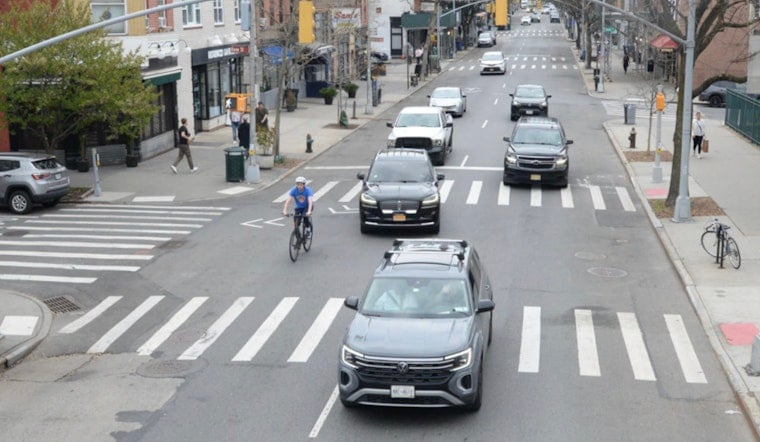
The parking-protected bike lane the city rolled out along Court Street in Cobble Hill last fall has turned into a neighborhood flashpoint, with some shopkeepers and drivers complaining the street now feels tighter and less user friendly. Merchants say the loss of curbside parking and a reworked traffic pattern have made quick customer errands and deliveries more of a headache, even as cyclists and some neighbors cheer a new southbound link into downtown Brooklyn. The redesign took the corridor from two travel lanes down to one, a move intended to rein in fast, reckless turns and cut down on chronic double parking.
What DOT Built And Why
As laid out in a project briefing from NYC DOT, the agency overhauled a 1.3 mile stretch of Court Street between Schermerhorn Street and Hamilton Avenue with a curbside, parking-protected bike lane, new pedestrian islands, and additional commercial loading zones. The plan repurposed about 59 parking spaces along the corridor and introduced steps like converting the east curb into a travel lane during rush hours to ease backups. DOT data cited in the briefing point to high rates of pedestrian and cyclist injuries on the corridor and a need for a safer southbound route linking Red Hook with downtown Brooklyn.
Merchants Say Parking And Deliveries Suffer
Local business owners told News 12 the revamp has made simple stops surprisingly complicated. Joan D'Amico, whose family coffee shop has been a neighborhood fixture since the 1940s, said the combination of lost parking and "added congestion" has discouraged quick customer visits, and argued that meters operating until 10 p.m. are "totally unreasonable" for the area. Several merchants stressed they are not opposed to bike infrastructure on principle, but want clearer loading rules and meter hours that better match how Court Street businesses actually operate.
Judge Dismissed Merchants’ Lawsuit
The Court Street Merchants Association sued the city in October, claiming DOT had not meaningfully consulted local businesses and warning the redesign would damage their bottom line. A Brooklyn Supreme Court judge tossed the case in January. As reported by Streetsblog New York City, Justice Inga O'Neale found that DOT had a rational basis for the project and denied a bid for injunctive relief, keeping the protected bike lane in place. The ruling folds into a broader, citywide fight over how far street redesigns should go when business worries collide with Vision Zero safety goals.
DOT Promises Adjustments, Points To Safety Data
NYC DOT hailed the court decision and reiterated that the redesign follows "proven" approaches that improve safety for all users, according to an agency statement. In a press release, Commissioner Mike Flynn highlighted that the project added a protected bike lane and shorter pedestrian crossings while aiming to curb reckless driving, and said the agency will keep monitoring conditions on the corridor now that the changes are in place. The project briefing also outlines planned curb tweaks and expanded loading areas that DOT says are intended to reduce entrenched double parking and help improve turnover for nearby businesses.
On The Ground: What Neighbors Can Expect
Advocates and DOT point to traffic counts and surveys showing Court Street is heavily used by people on foot, on transit, and on bikes, while many merchants say the new configuration feels like a daily grind for drivers and delivery vans. As reported by Streetsblog New York City, city filings and a DOT survey found that most people reached Court Street by walking, transit, or bicycle rather than by car, a figure supporters say undercuts dire predictions that the redesign will kill retail. For now, DOT and local stakeholders say they will keep an eye on traffic and loading patterns and adjust meter rules and curb regulations where they see persistent trouble spots.





