

























































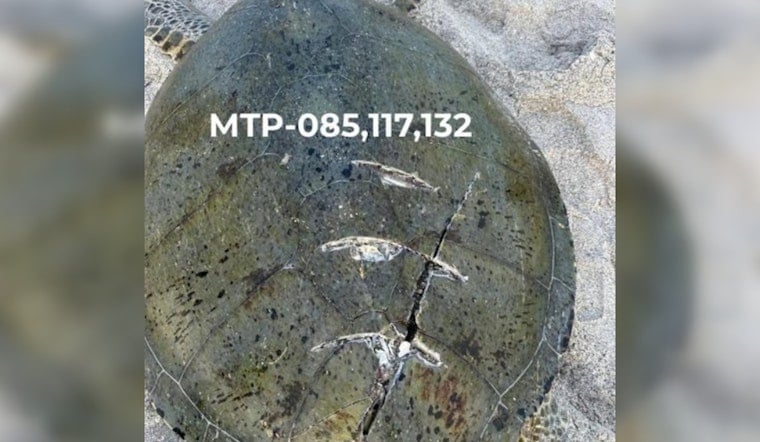
Beach patrol volunteers around Manasota Key and the Don Pedro islands have had a rough start to summer. Two adult sea turtles turned up dead within weeks of each other, and both showed injuries consistent with being hit by boats. One was a loggerhead found at the south end of Little Gasparilla Island over Memorial Day weekend, the other an adult male green discovered near Don Pedro State Park on June 1. With nesting season already underway, volunteers are warning locals to go slow and stay alert on the water.
According to YourSun, volunteers with the Coastal Wildlife Club confirmed the turtles had "skeg cuts," the parallel lacerations and deep wounds typically left by a vessel's skeg or propeller, and concluded the animals died from vessel strikes. The Coastal Wildlife Club, which patrols roughly 20 miles of shoreline across Sarasota and Charlotte counties, said the strandings came two weeks apart and underscored how dangerous shallow nearshore passages can be for sea turtles cruising just below the surface.
Why Adult Losses Matter
According to NOAA, many sea turtle species take about 20 to 30 years to reach sexual maturity. Losing an adult means losing decades of potential breeding, which is a serious blow for species that are already struggling. That long road to adulthood makes every mature turtle especially valuable to long term recovery efforts and to the success of each nesting season on local beaches.
Volunteers' On-the-Ground View
Local patrollers say they have documented four of the five sea turtle species that visit the Gulf coast this season and point to last year's first recorded leatherback nest on Manasota Key as proof that these stretches of sand are still critical habitat. YourSun reports the club asks beachgoers to send photos or video if they spot daytime crawls, so volunteers can verify and log unusual events quickly and accurately.
How Boaters Can Help
The Coastal Wildlife Club is urging boaters to slow down in shallow waters, obey no wake zones and designate a wildlife spotter to watch for turtles near the surface. Their "You Can Help" guide lists simple prevention tips, including wearing polarized sunglasses to cut glare, following posted speed limits and saving the Florida Fish and Wildlife Conservation Commission's Wildlife Alert number in your phone. See the advisory from the Coastal Wildlife Club for the full list of recommendations.
If You Find an Injured Turtle
If you see an injured, sick or dead turtle, officials say do not try to move it. Instead, call the FWC Wildlife Alert line at 1-888-404-FWCC (1-888-404-3922), which is listed on the FWC site, and be ready to provide the exact location and, if possible, photos. The FWC asks people to stay with the animal until responders arrive when it is safe to do so, and notes that quick, accurate reports can improve both rescue efforts and necropsy findings.
Patrols will continue through the summer, and local conservationists say that what the public does on the beach and on the water can tip the balance between a strong nesting year and a disappointing one. For now, volunteers have a simple request for boaters in the area: slow down, assign a spotter and keep that hotline number handy.




