

























































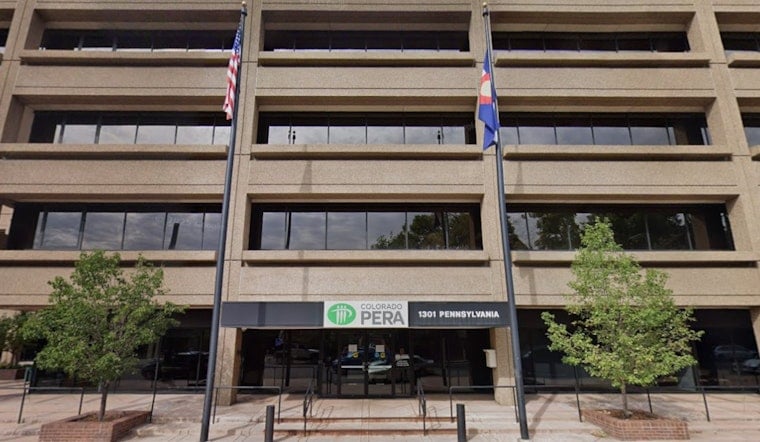
Denver retirees and public workers are seething after fresh reporting showed Colorado's largest public pension paying out big bonuses to its investment staff even as the fund absorbed historic losses and long-term setbacks.
Colorado's Public Employees' Retirement Association, better known as PERA, saw major investment losses in 2022 that weakened its funding position. Yet some in-house investment managers later collected six-figure incentive payouts. Retirees and union leaders say that disconnect is driving new demands for transparency and changes to how the money managers are paid.
An investigation by The Colorado Sun found that PERA's investment team averaged incentive payouts of about $299,000, roughly a 124% boost to base pay. Nearly half of the 38 people who have managed investments since 2020 more than doubled their total take-home pay with incentives. The Sun's analysis also shows nine investment officials receiving more than $400,000 in annual incentive payments, two staffers roughly tripling their pay through incentives, and longtime equities director Jim Liptak collecting around $653,000 in incentive pay in a single year. Union leaders told the paper the payouts felt "insane" while retirees continue to wrestle with benefit cuts and tight cost-of-living adjustments.
Incentive Budget Climbed Alongside Paychecks
PERA's own budget records show a steady increase in the money earmarked for investment incentives. The line item that once totaled only a few million dollars in 2018 has grown to more than $11 million in recent spending plans, and the 2026 compensation materials list about $12.85 million for incentive pay. According to PERA, the proposed 2026 operating budget groups wages, incentives and performance pay into a single personnel category of roughly $146 million. Those combined figures help explain how very large individual payouts can fit into PERA's overall budget.
Benchmarks, Not Raw Gains, Drive the Bonus Checks
PERA leaders counter that incentive pay is tied to beating benchmark targets and to long-term performance horizons, not to any single year of dollar returns. In interviews and public meeting remarks reported by The Colorado Sun, Chief Investment Officer Amy McGarrity said, "There's no subjectivity. We are not compensated in the incentive arena if we don't outperform." Even so, the Sun's records-based review found that managers often received large incentives in years when PERA's overall portfolio lost money or trailed peer funds.
Legal Rules, Bigger Pensions and Long-Term Costs
State rules treat certain incentives and one-time payments as PERA-includable salary when calculating pensions, a technical detail that can boost future retirement benefits for staff who receive big bonuses. The Code of Colorado Regulations lays out which types of payments count toward PERA salary and which are excluded, a distinction that legal experts say can affect long-term liabilities for the system. Federal guidance also sets a ceiling on how much compensation can be used in a tax-qualified pension calculation, with an Internal Revenue Service notice putting that annual limit at roughly $360,000 for recent plan years.
Political Blowback and the Next Fight
Lawmakers have already started tightening the screws on PERA's governance. A 2025 state law now requires the pension board to post meeting notices and certain financial information online and to publish additional financial data every year. PERA's own public reports show combined trust funding in the high-60s percentage range and a portfolio valued at more than $60 billion. Critics argue that those numbers justify renewed limits or new rules for incentive pay.
With public pressure building, PERA's board, state legislators, and member groups are expected to float ideas such as clearer caps on incentive pay, different performance benchmarks, or other policy changes. Whatever emerges from the boardroom or the Capitol, the uproar has sharpened a core question for Colorado: how to pay for in-house investment expertise while still protecting the retirement security of the public employees who rely on PERA. Members and retirees say they are keeping a close eye on upcoming board meetings and potential legislation for any sign of change.





