

























































State environmental regulators are gearing up for a fight over air pollution tied to Amazon's massive Energy Way Tech Campus in Hamlet, Richmond County. On July 30, the North Carolina Department of Environmental Quality will hold a public hearing in Rockingham on draft air permits that would let both Duke Energy and Amazon install large banks of diesel generators on the site. Some units would serve as temporary "bridge power" and others would stay on as long-term emergency backup. Neighbors and environmental advocates warn that layering that much diesel power into a census tract already flagged for health and social vulnerability could make local air quality worse.
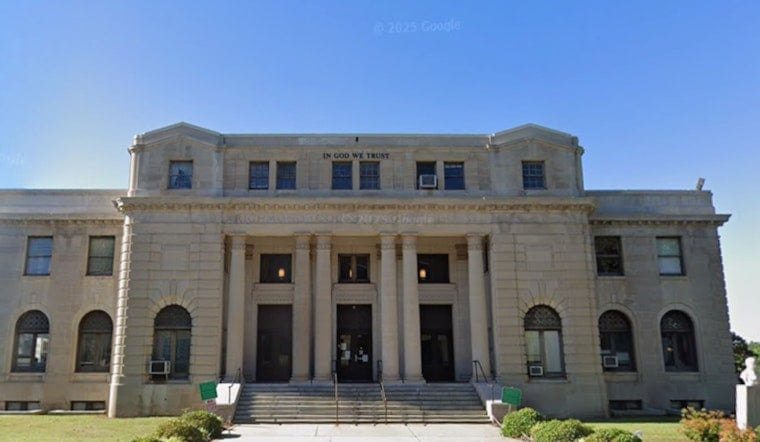
The North Carolina Department of Environmental Quality's Division of Air Quality will take oral and written comments at a public hearing at the Old Richmond County Courthouse (114 E. Franklin St., Rockingham) on Thursday, July 30 at 6 p.m. The public comment period stays open through July 31. Written comments can be emailed to [email protected] with the subject line "Amazon.25A and DukeRichmond.26C," or left by voicemail at 919-707-8726. The full notice and permit application materials are available through the agency's announcement at the NC Department of Environmental Quality.
Company filings and state staff reviews show the campus would include 21 buildings and be backed up by roughly 1,600 megawatts of on-site diesel generation. That is more capacity than some utility-scale power plants and roughly enough electricity to serve more than one million homes. Draft permit calculations indicate the backup units could emit between about 100 and 250 tons per year of nitrogen oxides, carbon monoxide and volatile organic compounds, with additional increases in particulate matter, sulfur dioxide and benzene. Those figures come from the permit filings and associated staff work, as reported by WUNC.
Who Would Run On-Site Power?
Duke Energy Progress has asked to modify its Richmond County Turbines permit so it can install 57 diesel-fired bridge-power engines on Amazon's property. Those engines would operate while the data center is connected to the grid, and state documents say they must be retired within one year of operation. Amazon's own filings seek permission for hundreds of diesel emergency engines that would stay on the site after bridge power is phased out. The application, draft reviews and fact sheets are posted in the state's online docket under the permit application.
Health And Equity Concerns
The proposed campus sits in a census tract that state officials flag as potentially disadvantaged, and the CDC Social Vulnerability Index classifies the area as highly burdened, with Black and Indigenous populations above the state average. An Amazon community-health report cited in local coverage notes that Richmond County ranks among the least healthy counties in North Carolina. Critics argue that layering in dozens or even hundreds of diesel units could worsen respiratory problems and other health risks for residents already facing higher burdens. Local reporting and the community profile are laid out by WUNC.
Permitting And The Law
Federal clean-air programs, including Title V operating permits and the Prevention of Significant Deterioration (PSD) review, set the bar for when big projects face tougher federal scrutiny along with extra monitoring and reporting. EPA guidance explains the Title V program and the major-source thresholds that trigger those duties, and state air permits typically spell out enforceable emission limits along with testing and reporting rules. If these draft permits are finalized, the state would require emission testing and monitoring as conditions of operation, and those limits would be legally enforceable.
Why It Matters For North Carolina
Across North Carolina, data centers are driving a surge in electricity demand, and utilities and regulators are under pressure to figure out how to add generation and beef up the grid without dumping higher costs onto residential customers. Duke Energy's recent regulatory filings and public hearings, including proposals for new generation near the Amazon site, have become flash points in that broader energy debate, according to reporting by WSOC.
The July 30 air-quality hearing is expected to serve as a key moment for residents and regional groups to press state regulators and company representatives on health impacts, emissions and the schedule for tying the campus fully into the power grid. The Department of Environmental Quality will weigh all comments submitted by July 31 before deciding whether and how to finalize the draft permits.





