

























































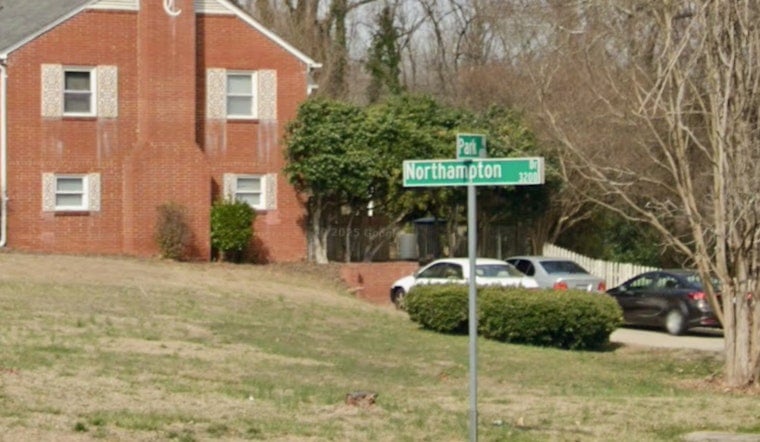
A Charlotte man is facing trafficking charges after detectives disguised as FedEx drivers delivered a package to his Park Road home last month — a package they already knew, thanks to a judge's warrant and a drug-sniffing dog, contained roughly 12 kilograms of cocaine. Michael Papadoupalos, 50, was arrested on July 25 after picking up the parcel about an hour after the staged drop-off, according to investigators.
The bust began a day earlier, on July 24, when Charlotte-Mecklenburg Police Department detectives conducted a canine open-air sniff of a FedEx parcel addressed to the Park Road residence, according to Charlotte Alerts News. The dog gave a positive alert for narcotics, and a superior court judge authorized a warrant to open the package, which turned out to hold 12 bricks of cocaine weighing approximately 12 kilograms. Papadoupalos, the outlet reports, was already a target of an ongoing narcotics investigation before the parcel ever arrived.
To confirm the drugs were meant for him, police applied for what's known as an anticipatory search warrant — a legal tool that lets officers get judicial sign-off to search a location once a specific future event, like a package delivery, actually happens. Under North Carolina legal procedure, that kind of warrant requires a judge to find probable cause that evidence of a crime will show up at a particular address once the triggering condition occurs, according to the UNC School of Government. Appellate courts in the state require a clear link between observed illegal activity and the target home before signing off on that kind of warrant.
The Staged Delivery and Arrest
With the warrant in hand, undercover officers dressed as FedEx delivery drivers and delivered the 12 kilograms of cocaine to the Park Road residence themselves. The report notes Papadoupalos was observed picking up the parcel about an hour later. Police then knocked down the door of the residence and arrested him on the spot, charging him with trafficking cocaine.
The tactic — an open-air K-9 sniff, a judicial warrant, and a controlled delivery by officers posing as couriers — is a well-established method for interdicting bulk narcotics shipped through private commercial carriers, establishing physical possession before an arrest is made. It mirrors a pattern seen elsewhere in the state: in March 2025, a joint operation by the Guilford County Sheriff's Office and Greensboro Police Department seized more than 12 kilograms of cocaine from a single suspect in central North Carolina, underscoring how regional trafficking organizations frequently move multi-kilogram loads through the state's transit and parcel networks.
What Papadoupalos Is Facing
The quantity involved puts Papadoupalos well beyond North Carolina's felony trafficking threshold. Under state law, trafficking 400 grams or more of cocaine is a Class D felony carrying a mandatory minimum prison sentence of 175 to 222 months — nearly 15 to 18.5 years — along with a mandatory $250,000 fine, according to FindLaw. At 12 kilograms, the amount police say was delivered to his home is roughly 30 times that threshold.
North Carolina law leaves defendants little room to avoid those mandatory minimums. Per the North Carolina Superior Court Judges' Benchbook, a trial judge can only depart from the mandatory sentence if the court makes a formal finding that the defendant provided “substantial assistance” in identifying, arresting, or convicting accomplices or other suspects — a narrow exception that remains the primary path to leniency in major trafficking cases even after the state's 2020 First Step Act.
Part of a Broader Enforcement Push
The arrest lands amid heightened drug interdiction activity across the region. CMPD reported a 21% increase in officer-initiated proactive activity and a 14% increase in total arrests in 2025 as part of targeted public safety strategies, per the City of Charlotte. The department's Vice & Narcotics Unit alone seized 448 pounds of suspected illicit narcotics during its 2024 operational year.
Nationally, drug shipments moving through parcel and postal networks remain a persistent target for federal agents. The U.S. Postal Inspection Service reported interdicting 1,910 cocaine shipments totaling 5,408 pounds in transit across the country between October 2025 and July 2026. And in June, federal prosecutors announced the results of Operation Spring Cleaning, a three-month multi-agency enforcement surge across North and South Carolina that led to 56 federal defendants charged and more than 254 kilograms of illegal drugs seized, according to the U.S. Department of Justice.
The Park Road case also isn't the only recent multi-kilogram cocaine discovery in Charlotte. Days earlier, an East Charlotte storage buyer stumbled onto roughly 25 pounds of cocaine inside an abandoned storage unit, prompting its own CMPD seizure. Taken together, the two cases suggest bulk cocaine continues moving through Mecklenburg County via a range of channels, from storage facilities to parcel carriers.
Several questions remain open in the Papadoupalos case. It's not yet clear whether federal prosecutors, such as the U.S. Attorney's Office for the Western District of North Carolina, will take up the case given the parcel's apparent interstate origin, who sent the package, or whether the arrest connects to the broader regional supply networks targeted in recent multi-agency surges like Operation Spring Cleaning.





