

























































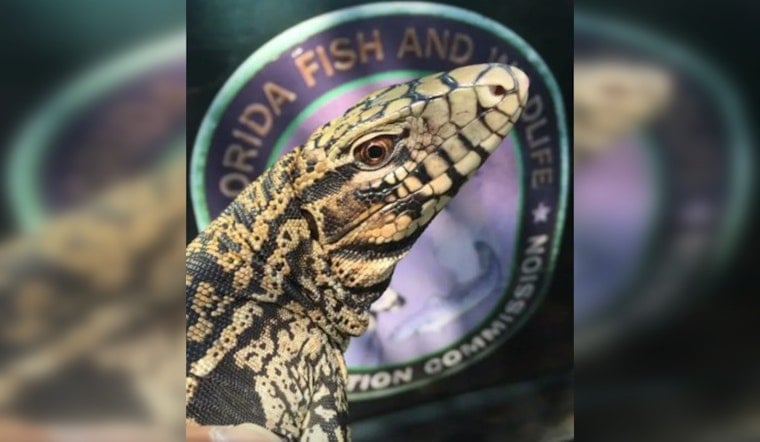
Dog-sized, black-and-white lizards cruising through Dundee backyards have neighbors double-checking fences and side-eyeing the bushes. The big reptiles have been spotted along fence lines, rummaging through leaf litter and sniffing around outdoor pet food, leaving some residents wondering if they are dealing with a loose pet or the start of a neighborhood problem.
"Let's hope they don't try to eat one of my little animals," Jeana Duke told Tampa Bay 28. Other neighbors said they had seen what looked like an Argentine black-and-white tegu roaming through yards in recent weeks, a detail that has quickly become the talk of the block and has pet owners on alert.
What Officials Say
The Florida Fish and Wildlife Conservation Commission says Argentine black-and-white tegus are nonnative to Florida, can grow to nearly five feet long, and eat small animals, eggs, and fruit. Tegus are considered invasive because of the damage they can cause to native wildlife and nests.
The agency notes that tegus may be removed or humanely killed on private property with landowner permission, and that targeted trapping efforts are already in place to keep numbers in check.
Why Scientists Worry
University of Florida researchers and state managers warn that these lizards reproduce quickly and have already established breeding populations in parts of South Florida and nearby counties, which raises the risk that they could spread farther across the state.
According to the University of Florida/IFAS, tegus have been documented eating eggs and juvenile reptiles, including gopher tortoise hatchlings and alligator eggs. Those records are a big reason biologists say that even a few sightings in central Florida are worth taking seriously.
Local Expert: Do Not Handle
Brandon Fisher, a wildlife expert with Gatorland, told Tampa Bay 28 that some of the tegus likely started out as released or escaped pets and that people should give them plenty of space.
"People should never try to handle one unless they know what they're doing," Fisher said. He added that tegus can prey on bird nests and other small wildlife, which is why trapping and reporting sightings matter.
How To Report A Sighting
If you see a tegu, the FWC asks residents to take a photo, note the exact location, and report it through the free IveGot1 app or by calling 1-888-Ive-Got1 (888-483-4681). The agency also runs targeted trapping and encourages people to surrender unwanted exotic pets through its Exotic Pet Amnesty program, according to the Florida Fish and Wildlife Conservation Commission.
Keeping pet food indoors and securing openings around yards can make properties less attractive to tegus while managers work to remove them. For now, Dundee residents say they will keep their eyes peeled and their fences shut, and anyone who thinks they have spotted one of the lizards is urged to snap a clear photo and report it so wildlife managers can track whether the reptiles are spreading.





