

























































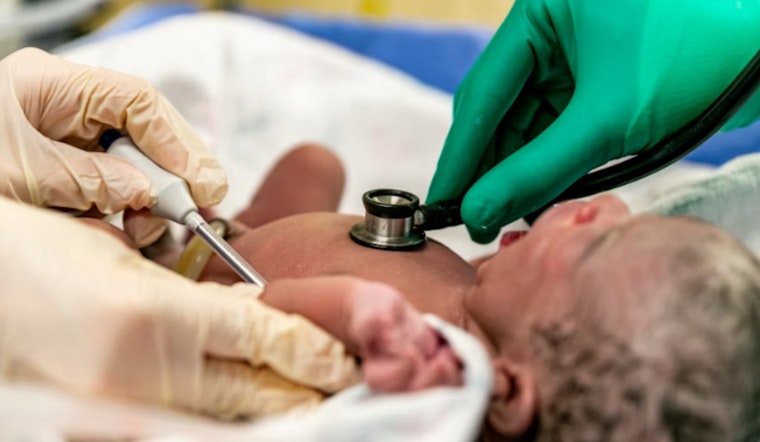
A quick eye scan at the bedside may give Duke doctors an early clue about which very preterm Durham babies are most likely to face motor and cognitive delays by age two, according to new research out this week. Using a handheld optical coherence tomography (OCT) device at about 36 weeks’ postmenstrual age, Duke researchers found that specific, measurable features in the retina tracked closely with how those same infants scored on developmental testing two years later. The work points to a possible noninvasive biomarker that one day could help NICU teams decide which babies need the fastest, most intensive follow-up.
Study findings and numbers
In a paper published June 4 in JAMA Ophthalmology, investigators followed 72 very preterm infants (mean gestational age 27.6 weeks; mean birth weight about 945 g). They reported that thicker retinal nerve fiber layer (RNFL) at 36 weeks’ postmenstrual age was associated with higher Bayley Scales motor and cognitive scores at age two.
The team found that every 10‑µm increase in RNFL thickness lined up with roughly a 7.5‑point jump in motor scores and a 3.7‑point bump in cognitive scores on standardized testing. Their models, as noted in their JAMA Ophthalmology paper, accounted for gestational age, small‑for‑gestational‑age status and maternal education.
Researchers used bedside OCT at 36 ± 2 weeks’ postmenstrual age and later brought the same children back at age two for standard developmental assessments, tying subtle retinal microanatomy to later neurodevelopmental outcomes.
Local coverage and reaction
Local media jumped on the story quickly. As reported by WCNC, Duke clinicians called the findings promising but stressed they are still early. Neonatal and pediatric specialists told reporters that having an objective, fast and easy‑to‑obtain biomarker could move at‑risk babies into early‑intervention services sooner, if larger studies show the same pattern.
Retinal imaging as a window to the brain
Researchers pointed out that the retina is the most accessible part of the central nervous system, so tiny structural shifts there can mirror broader brain development. A prior Duke Health release in 2015 described similar work tying retinal swelling in premature infants to poorer language and motor scores at age two, highlighting that bedside OCT in NICUs has been on Duke’s research radar for years.
Limitations and next steps
Clinicians are also clear about what this study cannot yet do. The project was small and conducted at a single center, and biological and sociodemographic differences between populations mean the results need to be tested elsewhere. Larger, multi‑center trials will have to show that RNFL or choroidal measurements actually add predictive power beyond current clinical models before hospitals rethink screening or follow‑up routines.
For now, the work offers an intriguing new angle on reading early brain health in the tiniest babies, without calling for instant changes to care. Researchers say the next move is careful validation, so retinal imaging can be evaluated responsibly as a tool to guide earlier intervention for very preterm infants.





