

























































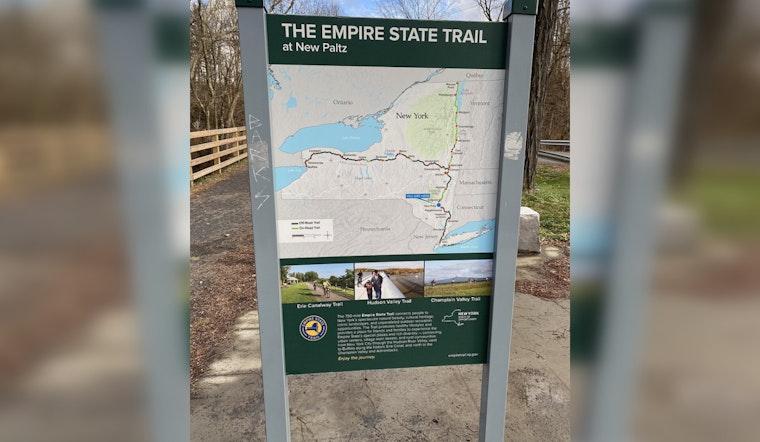
New York’s 750-mile Empire State Trail is not just a scenic route for cyclists and runners. A new statewide study released Tuesday finds the trail is quietly acting like an economic engine, generating roughly $1.87 billion in annual activity and drawing nearly 9.8 million visits a year. The findings frame the trail as a source of jobs, tax revenue and steady foot traffic for communities from Manhattan to the Canadian border.
According to a report by Parks & Trails New York, the Empire State Trail supports about 9,680 jobs and produces $640.9 million in annual employee earnings. The analysis estimates roughly $206 million in state and local tax revenue each year and pegs total annual economic output at $1.87 billion. On top of that, the study credits the trail with $78 million in yearly health-related savings, the protection of about 23,300 acres of off-road land and a reduction of more than 96 million vehicle miles traveled annually, all driven by an estimated 9.75 million trips on the route each year.
All those outings add up to serious spending. Day users shell out an average of about $30.32 per visit, while overnight visitors drop roughly $540 per trip, as reported by I LOVE NY. Survey responses also suggest the trail is doing double duty as a public health tool: 70% of users say they exercise more than one hour per visit, and 38% say they rely on the trail for at least half of their weekly physical activity.
Big returns for off-road investment
The report makes a particularly strong case for investing in separated, off-road trail segments. For every $1 invested in the Empire State Trail, the study finds, about $5.43 comes back in sales revenue. Off-road miles are the real workhorses, delivering roughly four times the economic impact of on-road sections; each off-road mile is estimated to generate about $3.9 million in annual output. The Empire State Trail, which New York state announced as complete in late 2020, still includes on-road stretches that the authors say are prime candidates for upgrades if the state wants to squeeze out even bigger returns. For more detail, see the Parks & Trails New York report and New York State transportation documents.
Where the dollars land
On the business side, many local owners told researchers the trail is not just background scenery, it is a location strategy. Nearly one in four businesses surveyed said the presence of the trail influenced where they set up shop. Those businesses also reported that trail-related customers account for roughly 26.2% of their annual sales. The economic bump is not limited to storefronts, either. The study points to residential benefits, with single-family homes on 0.25–0.5 acre lots near the trail commanding about a 14.3% value premium, or roughly $51,000 more, a sign the trail’s reach extends beyond restaurants and bike shops, as reported by I LOVE NY.
Next steps and takeaway
Leaders at PTNY say the trail’s real strength lies in how it stitches communities together, from New York City neighborhoods to upstate villages near the Canadian border. They argue the new numbers give state and local officials fresh evidence that off-road connections and targeted trail investments pay off. The question now is whether state and municipal budgets will follow the study’s findings with concrete funding, or leave some of that potential on the table.





