

























































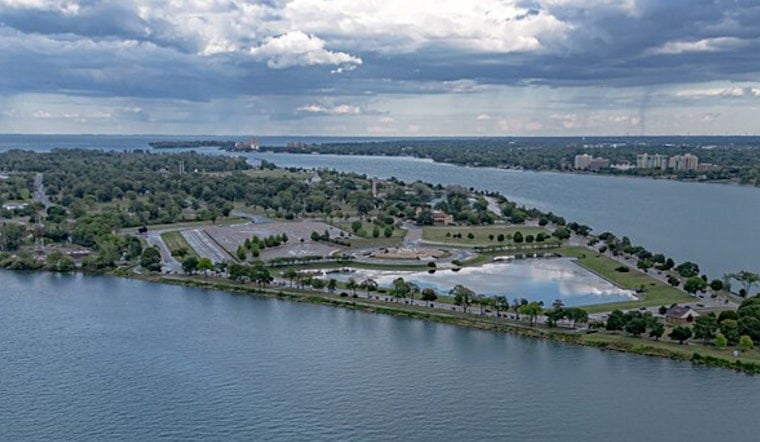
Michigan and the U.S. Environmental Protection Agency are teaming up on one of the Detroit River’s nastier stretches, announcing Tuesday that they will accelerate cleanup planning for the section near Belle Isle known locally as Harbortown and Harbortown-Upstream. The agreement covers planning and design to address decades of industrial contamination that left sediments tainted with PCBs, polycyclic aromatic hydrocarbons and heavy metals. Officials say the initial phase could focus on roughly 800,000 cubic yards of polluted sediment, with planning alone expected to cost about $10 million.
As reported by The Detroit News, staff from Michigan’s Department of Environment, Great Lakes and Energy and the EPA will develop a feasibility and remedial design plan for the Harbortown shoreline and upstream reaches. That reporting notes the $10 million partnership is meant to fund the technical groundwork, including mapping contamination, weighing cleanup options and lining up disposal sites, that has to happen before any major on-water construction. Officials have framed the move as an attempt to speed up a cleanup that has crept along for decades in smaller pieces.
What the feasibility work will involve
The feasibility study and remedial design will map where contamination is concentrated, compare cleanup options and identify where contaminated material would need to be removed or capped so engineers can pick the least risky approach. The EPA’s Detroit River Area of Concern page lists Harbortown as one of the priority target areas where remedial investigations and designs are being pushed forward to remove contaminated sediments and restore habitat, a standard step that comes before dredging or capping. This study phase will also set out a schedule and spell out which regulatory permits are required before contractors can begin any sediment removal or shoreline reconstruction.
How big the job could be
Full remediation of contaminated sediments in the Detroit River is expected to be a multiyear, multimillion-dollar undertaking, and independent reporting and analysis have shown that cleanup costs climb quickly once disposal, habitat restoration and long-term monitoring are factored in. Great Lakes Now has described how Great Lakes Legacy Act grants are often paired with state and other non-federal funding for projects like this, and that total costs for fully cleaning up Detroit River sediments have been estimated in the high hundreds of millions of dollars. Local coverage of related work, including the recent resumption of dredging in the Lower Rouge River, highlights that agencies are beginning to shift from studies to construction in the region, even as questions about how to pay for it all and where to put the dredged material remain unresolved, according to reporting from Planet Detroit.
Who’s watching
Downriver residents and environmental groups have pushed for faster action for years, pointing to industrial legacies, groundwater plumes and impacts on fishing and recreation. Local reporting shows Wyandotte neighbors and civic organizations pressing regulators over nearby industrial plumes that may be reaching the river, a reminder that any cleanup plan will unfold under close public scrutiny. State and federal officials say the Harbortown feasibility and design work will include community outreach and public briefings as they refine preferred cleanup options and sharpen cost estimates. Background on those community concerns and earlier investigations is available in EPA project materials and in coverage of Hoodline.
Next steps call for EGLE and EPA teams to finish the technical feasibility work and produce a remedial design that can compete for construction dollars and Great Lakes Legacy Act support. As The Detroit News notes, the agencies are expected to hold public meetings and follow-up technical briefings as they move from studies to timelines and funding negotiations.





