

























































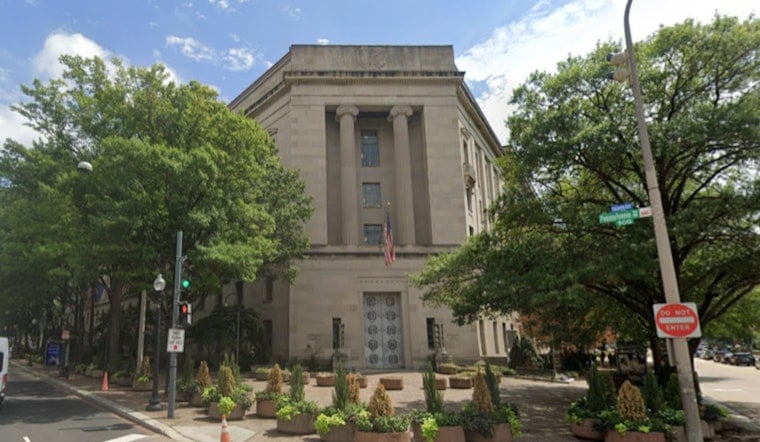
The fight over who gets the hometown discount on college in Massachusetts is now in federal court. On Monday, the U.S. Department of Justice sued the Commonwealth in Boston federal court, taking aim at a 2023 law that lets certain noncitizens, labeled "High School Completers," pay in-state tuition and qualify for state financial aid. Federal lawyers argue the statute improperly extends postsecondary education benefits to people unlawfully present in the United States and are asking a judge to shut the program down while the case plays out.
DOJ Files Suit And Turns Up The Heat
According to the U.S. Department of Justice, the Civil Division on Monday filed complaints against both Massachusetts and Rhode Island and asked federal courts to enjoin the challenged provisions in each state. "This is a simple matter of federal law: colleges cannot provide benefits to illegal aliens that they do not provide to U.S. citizens," Assistant Attorney General Brett A. Shumate said in the department's announcement. Associate Attorney General Stanley Woodward added that the department would continue to challenge state laws it views as placing "aliens over citizens."
What The Complaint Says
The Massachusetts complaint, filed in the U.S. District Court for the District of Massachusetts as Civil No. 1:26-cv-12952, names the Commonwealth, the Massachusetts Board of Higher Education and Commissioner Noe Ortega as defendants. It argues the state law is preempted by federal statute and squarely conflicts with 8 U.S.C. §1623(a), a section of the Illegal Immigration Reform and Immigrant Responsibility Act of 1996. The filing asks the court to declare Mass. Gen. Laws ch. 15A, §9 unconstitutional and to permanently enjoin its enforcement. A copy of the complaint is available from the Justice Department's filings.
Money On The Line
To show what it calls "preferential" treatment, the complaint leans on the gap between resident and nonresident prices. One example: Massachusetts College of Art and Design lists in-state tuition at about $15,860 a year and out-of-state tuition near $44,700. Federal lawyers say the statute not only delivers those lower in-state rates to qualifying noncitizens, it also opens the door to state-funded grants and scholarships. According to the complaint, that setup disadvantages U.S. citizens who live outside Massachusetts. The school's published cost tables provide the pricing backdrop cited in the filing.
How The State Program Works
Massachusetts' "High School Completers" pathway took effect on July 1, 2023. It allows students who attended a Massachusetts high school for at least three academic years and who graduated, or earned the equivalent credential, to be considered for in-state tuition and state financial aid. The Massachusetts Department of Higher Education requires applicants to provide a valid Social Security number, documentation of an Individual Taxpayer Identification Number, proof of Selective Service registration if applicable, or a signed affidavit promising to apply for lawful status within 120 days. A standardized Tuition Equity form and affidavit are used to document eligibility.
State Response And Local Stakes
State officials have signaled that they plan to stand by the law. As reported by the Boston Globe, a spokesperson for Attorney General Andrea Joy Campbell previously said the office "will of course defend Massachusetts law should it be challenged." Gov. Maura Healey celebrated the measure when it was enacted, framing it as an effort to expand college access for students raised in the Commonwealth.
Legal Context: Mixed Rulings Around The Country
The Justice Department has launched a wider campaign against similar tuition and aid laws in multiple states and, in its announcement, pointed to recent wins in Texas, Kentucky, Oklahoma and Nebraska. The scoreboard is far from one-sided, though. A federal judge earlier this year dismissed the DOJ's challenge to Minnesota’s program, underscoring that courts are split and the litigation path is anything but guaranteed. The department's press release and national news coverage sketch out that broader national backdrop.
What Comes Next
In Massachusetts, the complaint asks the court to block enforcement of the challenged provisions while the case proceeds. The Commonwealth will have an opportunity to respond in the District of Massachusetts, and the dispute could move through one or more rounds of appeals depending on how the district court rules. In the long run, this case could end up as part of a larger legal fight over the reach of 8 U.S.C. §1623(a) and how far states can go in setting their own tuition and financial aid rules.




