

























































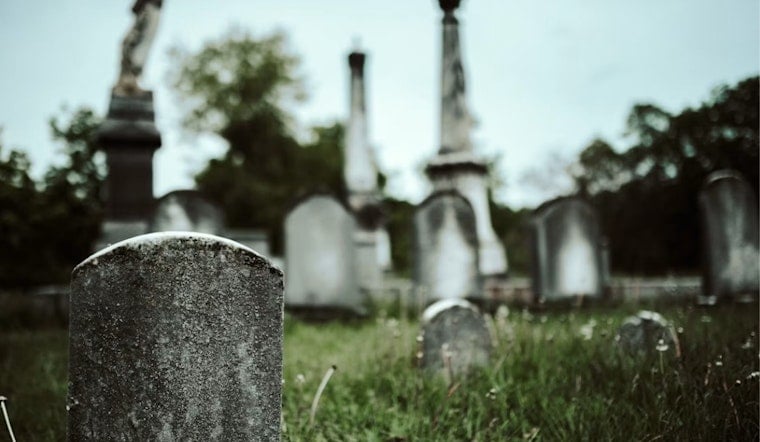
Hidden behind a thick stand of trees off FM 455 near Hub Clark Road in Pilot Point, a roughly 1.5-acre burial ground is all that remains in plain view of a freed-people community that once lived there. When descendants and volunteers finally got limited access again, they found toppled and weathered headstones, heavy undergrowth and visible erosion. Researchers and relatives say the ground likely holds hundreds of burials, even though only a few dozen names have been confirmed so far. Local advocates warn that without permanent access and a serious preservation plan, more of the cemetery’s history will quietly vanish.
Descendants Confront Overgrown Graves
Members of the St. John’s Cemetery Association and relatives were allowed back into the cemetery on May 9, their first visit in two years. Volunteers found grave markers discolored, cracked and often unreadable, with some stones tipped over and swallowed by brush, as reported by the Fort Worth Star-Telegram. The paper notes that the site is believed to contain more than 400 burials, while researchers have been able to confirm only about 56 names. Longtime activist Willie Hudspeth described the damage as a painful reminder of lives that were marginalized in death much as they were in life.
Group Works To Repair A Buried History
The St. John’s Cemetery Association, formed in June 2025, says its mission is to secure dependable access, document burials and restore the cemetery, according to the St. John's Cemetery Association. A University of North Texas report filed with county officials traces the site’s origin to an 1891 deed and details how an inaccurate boundary description from 1918 helped leave the cemetery landlocked, complicating both preservation and research. Association leaders are pushing for ground-penetrating radar, clearer boundary markers and voluntary easements to help identify descendants and protect the graves that are still unmarked.
Historic Status And The Rules For Getting In
Denton County lists “St. John Cemetery” among the burial sites that have received the Texas Historical Commission’s Historic Texas Cemetery designation, according to Denton County. Under state law, anyone denied access to a cemetery without a formal entrance is entitled to reasonable ingress and egress for visitation, as outlined in the Texas Statutes. Advocates say the historic certification and state protections should bolster their push for access, but note that paperwork alone has not yet translated into a lasting, on-the-ground solution.
Next Steps For Access And Long-Term Care
The association says it is negotiating voluntary easements with neighboring landowners, working with legal counsel and pressing for both permanent access and a formal conservation plan, according to the St. John's Cemetery Association. The Fort Worth Star-Telegram reports that county officials once approved cleanup funding but later stopped routine maintenance, a history that association leaders say highlights why they now insist on enforceable agreements rather than short-term promises. “This is about correcting the wrongs of history,” lead researcher Jessica Luther Rummel told the paper, as volunteers continue working to recover names and press for markers, surveys and protective fencing around the burial ground.





