

























































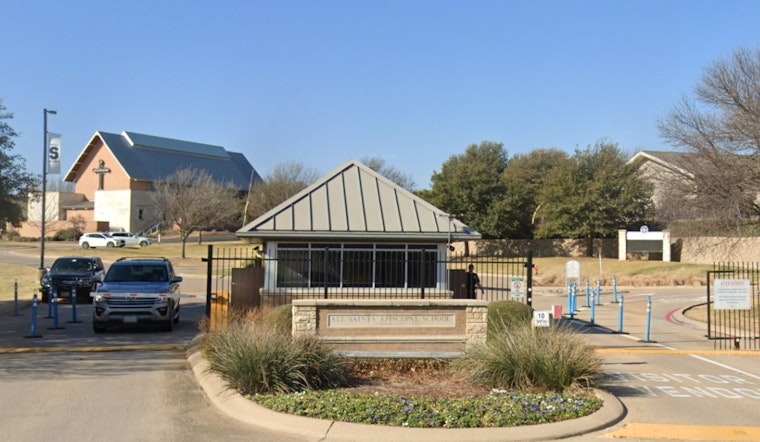
The parents of a 16-year-old boy are suing All Saints’ Episcopal School in Fort Worth after a lunchtime prank allegedly modeled on a TikTok “skull crusher” challenge left their son briefly paralyzed and with a spinal cord injury, according to a newly filed lawsuit. The complaint says three classmates coaxed him into a hallway to film the stunt, kicked his legs out from under him while he was mid-jump, and watched as he crashed onto his thoracic spine. His family says doctors later diagnosed a concussion and fractures to three thoracic vertebrae, and that school staff moved him without a neck brace or backboard before making him stand and walk.
What the Lawsuit Alleges
The 13-page complaint, filed in Tarrant County, accuses the private school of negligence, negligent supervision and a mishandled emergency response that “likely aggravated” the teen’s injuries, and it seeks damages for the family. The filing claims the same students had already performed the same dangerous stunt on at least six other classmates. It also alleges that no ambulance was called for more than 45 minutes after the assault.
According to the suit, the school failed to have a staffed nurse’s office in the upper school and allowed employees to move the injured student without standard spinal precautions, as reported by The Texas Lawbook.
How the Assault Unfolded
The lawsuit says three students convinced the boy to jump for a video, then “violently” kicked his legs out from under him, knocking him unconscious for several minutes and leaving him temporarily paralyzed. The complaint alleges the students stood over him laughing, called him a “loser” and recorded what happened, with that footage later posted online.
The family had already met repeatedly with school administrators about what they describe as escalating bullying prior to the May incident, and the suit contends those warnings went unaddressed, as detailed by the Fort Worth Star-Telegram.
School Response and Statements
All Saints’ has told reporters it is aware of the lawsuit but has not yet been formally served and does not comment on pending litigation. The complaint quotes Head of School Wallace Worden as telling the family after the assault, “This is my fault. I knew this culture was at our school, and this is on me.”
In a brief statement to WFAA, the school said it is aware of the lawsuit and offered no further comment.
Legal Team and Next Steps
The Fulton family is represented by attorneys from Tillotson Patton and Zehl & Associates. Their lawsuit brings claims that include negligence, negligent supervision, gross negligence and breach of the school’s in loco parentis duties.
The Texas Lawbook identifies the plaintiffs’ counsel as Jeff Tillotson, Mollie E. Mallory and Sara K. Babineaux of Tillotson Patton, along with Boston C. Mallory of Zehl & Associates, and notes that a case number was not immediately available.
Why It Matters
Across the country, dangerous group pranks tied to viral social-media trends have sent students to emergency rooms and, in some cases, led to criminal charges. The so-called “skull-breaker” or “skull-crusher” challenge has been widely condemned, and platforms say they remove content that promotes such stunts. National coverage has chronicled hospitalizations and prosecutions linked to the prank, along with repeated warnings to parents and schools.
As reported by The Washington Post, officials have urged both vigilance and the prompt removal of dangerous clips.
The Fulton family’s lawsuit asks a court to hold All Saints’ Episcopal School responsible and to award damages for medical expenses, pain and suffering and other losses. How the case unfolds will depend on the court’s schedule and on whether prosecutors decide to pursue related criminal charges.
For now, the school says it has not been served and is staying silent while the complaint works its way into the Tarrant County civil system. Parents in the community are calling for clearer safeguards for students, and local observers are watching to see whether this lawsuit forces changes in how private schools respond to viral-trend violence and on-campus emergencies.





