

























































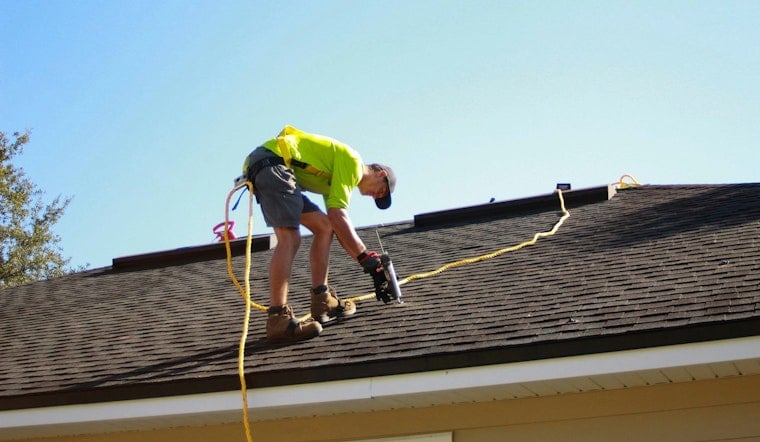
Hurricane season is here, with the Atlantic season officially under way as of June 1, and Jacksonville homeowners are finding out their roofs may now decide the fate of their insurance. As renewal notices land in mailboxes this spring, many residents say carriers are suddenly zeroing in on roof age, condition and wind standards before they will commit to another year of coverage.
Local reporting has documented insurers ramping up demands for fresh inspections and roof upgrades ahead of renewals, leaving homeowners scrambling to book licensed inspectors and contractors before storms start spinning toward Florida. That pressure has only intensified since the season’s official start, according to Action News Jax.
What the law actually protects
Florida law does offer a bit of a shield. A homeowners policy cannot be nonrenewed solely because a roof has hit a certain age if an authorized inspection shows the roof still has at least five years of remaining useful life. The rule, and how insurers are supposed to calculate “roof age,” is set out in state statute 627.7011, which applies to policies issued or renewed after July 1, 2022. Florida Statutes.
Inspections and tighter documentation
The Office of Insurance Regulation has tightened the statewide wind-mitigation paperwork insurers use to award hurricane-resistant homes. The Uniform Mitigation Verification Inspection Form (OIR-B1-1802) was revised this spring, and the new version demands more detailed proof of permits, product approvals and photos. For inspections completed on or after April 1, the state says the revised form is mandatory, which raises the stakes for accurate documentation if homeowners want premium credits. Florida Office of Insurance Regulation.
The update matters because many carriers now insist on a current wind-mitigation report (the OIR-B1-1802) or a Remaining Useful Life (RUL) inspection once a roof nears their internal cutoff ages. Where homeowners can prove mitigation features such as hurricane clips, secondary water resistance or properly permitted roof replacements, insurers are more likely to keep coverage in place or offer discounts rather than a dreaded nonrenewal notice.
There is also some help for those who qualify. The state-run My Safe Florida Home program, administered by the Florida Department of Financial Services, offers free wind-mitigation inspections plus matching grants for eligible homeowners who need upgrades. The goal is to lower the upfront cost of hardening a home and to secure long-term insurance savings for participants. My Safe Florida Home.
Wind-mitigation inspections themselves tend to be relatively inexpensive, often well under a few hundred dollars, and documented improvements can cut the wind portion of a premium by double digits in many cases. Insurance advisers and local brokers point out that the features shown on the mitigation form, such as permitted roof work, impact-rated doors and windows, and proper roof-to-wall attachments, are what really move rates. Detailed explanation of those credits is available from local independent agencies. Greene & Associates.
How Jacksonville homeowners should act
Start with the paperwork already in your hands. Read your renewal notice and declarations page closely, since Florida rules require insurers to spell out why they are not renewing and to follow specific timelines for notices during hurricane season. If the carrier flags roof age or condition, line up a Remaining Useful Life (RUL) inspection with a licensed inspector or obtain a current OIR-B1-1802 wind-mitigation inspection so you have documentation the insurer is required to consider.
Hold on to every piece of official proof you can. Save permits, final inspection approvals and invoices from any roof work, because the revised mitigation form emphasizes hard documentation rather than recollection. If you qualify, use the My Safe Florida Home portal to request a free inspection or grant screening. If you do not qualify, hire a licensed inspector who will complete the updated OIR form, then send that report straight to your agent so they can shop the market if needed.
If a carrier refuses to accept a valid inspection or threatens nonrenewal in a way that appears to conflict with state statute, homeowners can file a complaint and request help from the Florida Office of Insurance Regulation or the consumer assistance programs at the Department of Financial Services. Before taking that step, keep a clear record of every notice, inspection report and conversation with your insurer in case regulators ask for backup. Florida Division of Consumer Services.
Local context and capacity
In Jacksonville, roofers and inspectors typically get jammed up early in the season, and city preparedness materials warn that repairs and mitigation work are among the most common hurricane-related needs residents report. Anyone considering upgrades is urged to reserve a spot on a licensed roofer’s schedule, and to make sure the contractor pulls permits and secures final inspections so insurers will accept the improvements. City of Jacksonville.
For many Jacksonville homeowners, the calculus is straightforward: paying for a certified mitigation report or a properly permitted roof replacement can sting at first but may preserve access to coverage and trim annual premiums. With hurricane season already in motion and the new inspection rules in place, insurers and city resources alike stress that acting before a storm shows up, not after, is the safer strategy.





