

























































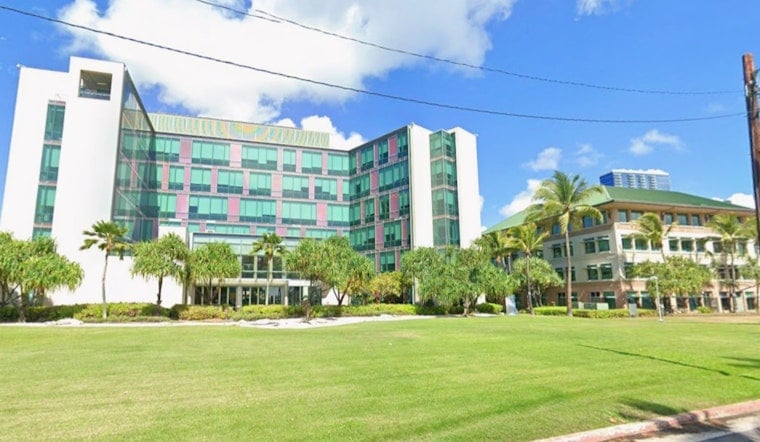
At the University of Hawaiʻi Cancer Center in Kakaʻako, a garage-sized ground-floor room is getting a serious glow-up into a compact artificial-intelligence data center aimed at sharpening clinical tools for Hawaiʻi and the wider Pacific. The idea is to give local clinicians computing power and datasets tailored to the islands' diverse communities, where national AI systems can miss key differences. Local leaders say the project could anchor new research jobs and help pull more federal dollars into Honolulu-based studies.
Federal records show the National Institutes of Health has awarded a P20 grant, listed as P20GM161995, to establish the Pacific Center for Artificial Intelligence and Data Science in Medicine with an initial award of $2,647,500, according to HHS TAGGS. The entry appears in HHS tracking for fiscal year 2026 and is intended to seed coordination, training and infrastructure work for the new center.
The Honolulu Star-Advertiser reports the award is part of a five-year federal push that includes roughly $300,000 to convert and equip the cancer-center space, with work on the lab expected to wrap by the end of the year. Project leads told the paper the facility is projected to employ about 26 people and that the initial federal investment could unlock an additional $50 million to $100 million in downstream research funding for Hawaiʻi. Sen. Brian Schatz, who pushed for the funding, praised the move while also warning about AI’s risks, from fraud and theft to cybersecurity and energy and water use, as the state builds this new capacity, according to the paper.
The UH Cancer Center will host the lab and already serves as the state's hub for cancer research and clinical trials, operating out of facilities in Kakaʻako and partnering with the John A. Burns School of Medicine and local health systems. The center is the only National Cancer Institute-designated cancer center in Hawaiʻi and the Pacific, and it describes research on the islands’ mixed populations as central to its mission. Those local ties, officials say, make the center a natural home for the new computing capacity, according to the UH Cancer Center.
Why researchers say it matters
UH investigators told reporters that existing AI databases often fail to capture the ethnic mixes common in Hawaiʻi, and that more detailed data on Filipino, Korean, Japanese and Chinese patients could improve diagnoses and treatment for local communities. Co-principal investigator John Shepherd said the initiative is meant to help build tools tuned to Pacific populations and keep Hawaiʻi scientists at the table as AI reshapes medical practice, per the Honolulu Star-Advertiser.
What's next
Officials say the PAC-AID program will use the small data center to speed up collaborative projects, training and model development while cutting down on the need to ship identifiable records off-island. The UH Cancer Center's recent workshop with Google Cloud highlighted federated learning and other privacy-minded approaches as ways for researchers to share models without exposing patient-level data, a strategy the center plans to lean on as the lab comes online, according to the UH Cancer Center.
For Honolulu clinicians and Pacific health systems, the center is pitched as a way to get tools built with local people in mind rather than retrofitted from mainland datasets. Researchers say the payoff will depend on careful data governance, local hiring and continued federal support as the project moves from hardware to models and real-world clinical pilots.





