

























































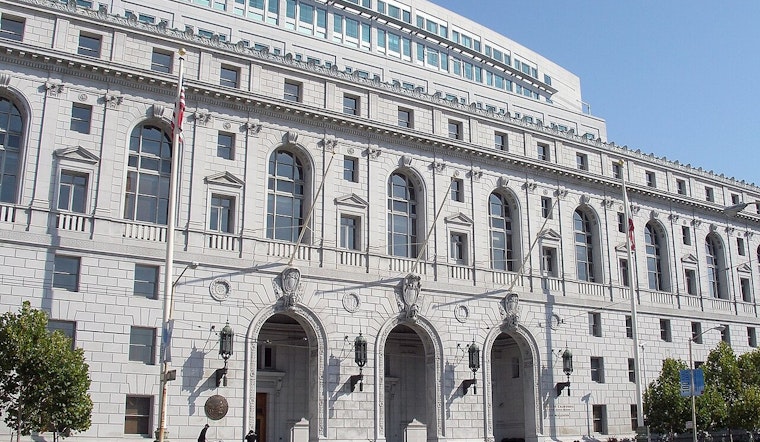
California’s highest court has upended a long-running Los Angeles death penalty case, reversing both the conviction and death sentence of Samreth Sam Pan and sending the decades-old file back to a county trial court. The justices concluded that Pan’s trial lawyer conceded his guilt during the penalty phase in a bid to save him from execution, even after Pan directly objected, a move the court said crossed a constitutional line. The ruling leaves co-defendant Run Peter Chhoun with most of his convictions intact, but one jury finding has been thrown out, setting the stage for fresh proceedings years after the killings.
What the court said
The majority found that Pan’s attorney “made the strategic choice to concede Pan’s guilt of second-degree murder in an effort to avoid the death penalty,” and that this approach “deprived Pan of his right to choose the fundamental objective of his defense.” According to the California Supreme Court, those errors required vacating Pan’s conviction and death judgment and sending the case back to Los Angeles County Superior Court for further action.
What happens next
The case now returns to a Los Angeles County Superior Court judge, where prosecutors and defense lawyers will have to hash out schedules, possible retrial strategies and whether to pursue a new penalty phase. As reported by MyNewsLA, the decision follows years of written briefing and a reargument in the high court earlier this year. Any new hearings or trials are likely to take months to get on the calendar, given the age of the case and the layers of legal issues still in play.
Case background
Pan and Chhoun were tried separately for three 1995 killings: the July 27, 1995, shootings of Nghiep Thich Le, 48, and his father, Hung Dieu Le, 73, in Sacramento, and the August 8, 1995, killing of Miguel Vargas Avina, 20, in Pomona. Those prosecutions led to death penalty recommendations in the early 2000s, a period covered at the time by the Los Angeles Times. Chhoun also has a separate death judgment out of San Bernardino County that has survived earlier appeals, leaving the two men on very different paths in post-conviction litigation.
Dissent and race claims
Associate Justice Goodwin H. Liu, writing in dissent, argued that prosecutors “invoked cultural scripts” and leaned on stereotypes about Cambodian immigrants when urging jurors to impose a severe sentence on Chhoun, language that has drawn particular scrutiny in coverage of the ruling. The majority, however, turned down Chhoun’s challenges under the California Racial Justice Act of 2020, but did throw out one jury finding, a gang enhancement, after concluding that jurors were never told that the charged offenses themselves could not be used to prove a pattern of gang activity, according to MyNewsLA.
Why it matters
The ruling zeroes in on bedrock criminal procedure questions: how far a defense lawyer can go in conceding guilt over a client’s express objections, and how newer laws like the Racial Justice Act should be applied to older capital cases. Legal observers say the court’s handling of case S105403 is likely to become a touchstone in future fights over the RJA and over defense strategy in serious felony trials, a tension that has already shown up elsewhere on the high court’s docket. In Los Angeles, the impact is immediate and concrete, as a long-dormant death penalty case returns to the local calendar and threatens to reopen painful issues for victims’ families and the broader community.





