

























































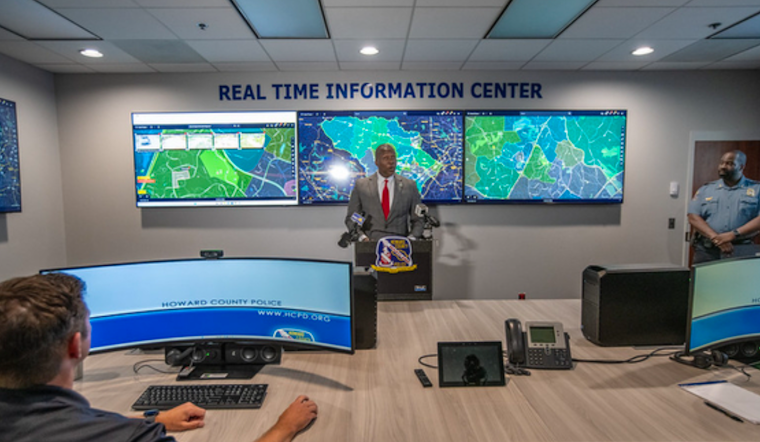
Howard County has cut the ribbon on a new real-time information center in Laurel, a control room county leaders say will stitch together live video and sensor feeds to support officers racing to unfolding incidents. Inside, rows of monitors and dashboards are set up to display drone footage, clips from body-worn cameras, and streams from public and private surveillance systems. Officials are selling it as a way to get faster situational awareness to officers on the street, while also insisting that the operation will be governed by policies meant to safeguard civil liberties.
How the center works
The new hub pulls live feeds from drones, officers’ body-worn cameras, and public surveillance systems, with information updating in near real time. County leaders said business and residential cameras can be voluntarily registered for possible integration in the future. County Executive Calvin Ball said the system is designed to enhance public safety while fully protecting individual rights and freedoms, and officials told reporters the unit was already put to work during the most recent Preakness to help monitor crowd and traffic conditions. According to WBAL, the department is banking on the consolidated view to speed up response and evidence collection when seconds matter most.
Officials emphasized that connecting private cameras will be voluntary and that analysts will operate under written access rules instead of running continuous, unrestricted surveillance. WBAL reported that the department plans to roll out a camera-registration portal in the coming months and that the system will be used for major events and critical incidents.
Privacy and oversight concerns
Real-time information centers and voluntary camera registries have been popping up across the country in recent years, earning praise for quicker investigations while also drawing scrutiny from privacy advocates who worry about data retention, access rules, and the slow creep into broader surveillance. The Atlas of Surveillance, a project of the Electronic Frontier Foundation, tracks dozens of local camera registries and related programs and notes that policies, including bans on facial recognition and requirements for detailed access logs, vary widely from agency to agency. Per the Atlas of Surveillance, civil-liberties groups are calling for clear standard operating procedures, independent audits, and public reporting so that any safety gains do not undercut community trust.
How other cities approach it
Departments that have piloted similar rooms have taken different tacks on staffing, transparency, and technical controls. Some run their real-time centers only on limited schedules, while others flip the switch primarily for large events or emergencies. Knoxville, for example, launched a small-scale hub with strict rules around who can access it and an opt-in program for private cameras, and local reporting describes agencies in general as carving out policies that address facial recognition, logging, and camera-owner permissions. Coverage of other city rollouts highlights the operational advantages agencies point to alongside the oversight questions advocacy groups keep pressing, per recent coverage of other city rollouts.
What to watch next
Howard County officials say they will publish details on the camera-registration process and the center’s operating rules in the coming weeks, and they are encouraging residents to read through those policies before deciding whether to opt in. For official statements and updates from the county, see the Howard County government news page at Howard County government.





