

























































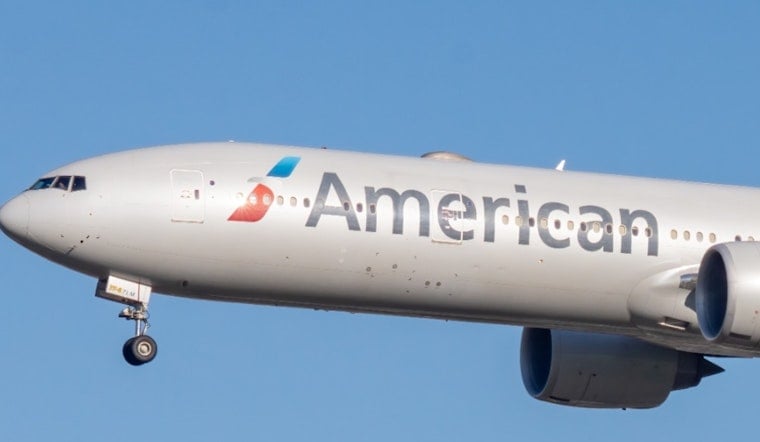
An American Airlines Boeing 777 headed for Charlotte got zapped by lightning over the U.K. this week and wound up turning back to London, its crew declaring a “general emergency” before returning to Heathrow. The widebody later landed safely, rolled out under the watchful eyes of airport fire crews and then taxied to a gate where passengers were taken off the aircraft. American has not yet said whether the jet sustained any damage, and the plane remains grounded while engineers complete a required post-strike inspection, a situation that could ripple through Charlotte connections fed by the flight.
Flight AA735, a Boeing 777-300ER, left London Heathrow around 3:05 p.m. and was struck by lightning over Manchester roughly 30 minutes into the journey. The crew then set their transponder to the emergency code and pointed the jet back toward LHR, where it touched down at about 4:35 p.m., as reported by The Charlotte Observer. Clips posted to social platforms captured the aircraft’s return and on-runway inspection, while airport fire crews carried out checks before the jet moved to a gate. Passengers were taken off and, according to the same report, American began handling rebooking and overnight arrangements.
According to the National Weather Service, big commercial jets are typically struck by lightning about once or twice a year and are built with conducting paths that let the electrical current safely travel through the airframe. The agency also notes that when a strike is suspected, airlines must carry out a formal inspection and that the last lightning-caused crash involving a commercial transport occurred many decades ago. That mandatory inspection is why this particular 777 cannot simply jump back into its scheduled rotation until maintenance teams sign off.
How This Could Hit Charlotte Travelers
A grounded widebody parked in Heathrow’s evening bank is the kind of headache that can quickly snowball into missed connections for passengers heading through Charlotte, industry trackers say. Flight-tracking outlets and ATC analysts note that post-strike inspections on a 777 often take 24 to 72 hours when no reportable damage turns up, and during that window airlines either clear the aircraft or hunt for a spare one, a task that grows tougher the longer those checks drag on, per ATC Intelligence. Because the flight left from the U.K., passengers may be entitled to certain care while they wait to be rebooked, although cash compensation can be limited if American categorizes the lightning as an extraordinary circumstance.
What ‘Squawk 7700’ Really Signals
When the pilots dialed their transponder to code 7700, they were declaring a general emergency that gives them priority handling and alerts emergency services on the ground. The FAA’s Aeronautical Information Manual explains that squawking 7700 flags the aircraft to every air traffic control facility in range and triggers immediate, coordinated support, but it does not automatically mean a crash is imminent; see the FAA guidance. Crews often use the code as a precaution so fire trucks and a clear runway are waiting when the jet arrives.
What Passengers Should Do Now
If you were booked on AA735 or you are connecting through Charlotte in the next 48 hours, start by checking your reservation on the American Airlines app or aa.com and turn on flight alerts. Hang on to receipts for any expenses the airline does not immediately cover, and ask about reroutes through partner hubs if the original flight pattern is no longer available. Travelers holding premium credit cards with trip protection should also look at their benefits portal for possible reimbursement of delay-related costs.
American did not immediately respond to questions about aircraft damage or how passengers were rebooked, according to The Charlotte Observer. Regulators and the airline’s maintenance teams will ultimately decide when the 777 is cleared to fly again, and that call will determine how quickly the London to Charlotte schedule gets back to normal. This story will be updated as new details emerge.





.jpg)