

























































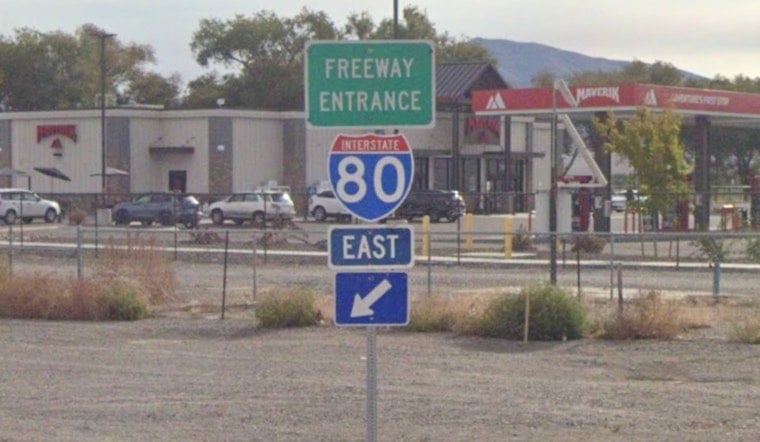
On Monday morning, June 29, crews opened a new segment of Interstate 80 outside Lovelock that officials say removes the highway’s final traffic signal between the Pacific and Atlantic coasts. The timing lined up with the same date the federal law that created the Interstate system was signed, a bit of road‑nerd symmetry that is hard to miss. For local drivers the change means fewer at‑grade crossings in the small Pershing County city and a more consistent freeway experience for everyone rolling straight through. The announcement went out on the state’s official social channel with photos of crews finishing pavement and ramp work.
A new section of interstate in Lovelock was finished, eliminating the last I-80 traffic signal between the Pacific & Atlantic coasts. https://x.com/i/status/2071604098382627051
— Nevada DOT (@NevadaDOT) June 29, 2026
What The State Posted
According to Nevada DOT on X, the newly finished Lovelock segment “eliminates the last I‑80 traffic signal between the Pacific & Atlantic coasts.” The post, published at 14:38 UTC on June 29, 2026, included photos of the interchange and pavement work as crews wrapped their final shifts. The agency framed the change as a safety and mobility boost for both long‑distance travelers and local traffic.
Interstate Legacy And Where I‑80 Fits
The Interstate Highway System itself was launched when President Dwight D. Eisenhower signed the Federal‑Aid Highway Act on June 29, 1956, a milestone noted by the Federal Highway Administration. As Wikipedia notes, Interstate 80 is one of the system’s primary east–west routes and runs coast to coast from the San Francisco area to the New York metropolitan region. That long corridor is part of why any gap or at‑grade signal on I‑80 tends to draw broader attention, and why continuity matters for a major freight and cross‑country artery.
Local Impact And What To Expect
For Lovelock and Pershing County, the removal of the signal reduces direct interaction between interstate through traffic and local streets, a change transportation planners typically associate with fewer conflicts and smoother flows. The social post marked the high‑level milestone, while local drivers and trucking firms will be watching for final signing, striping and any follow‑up traffic pattern notes from the department as crews finish ancillary work. Over the long haul, the project closes a small but very visible gap in continuous limited‑access travel along a route that already stretches nearly coast to coast.





