

























































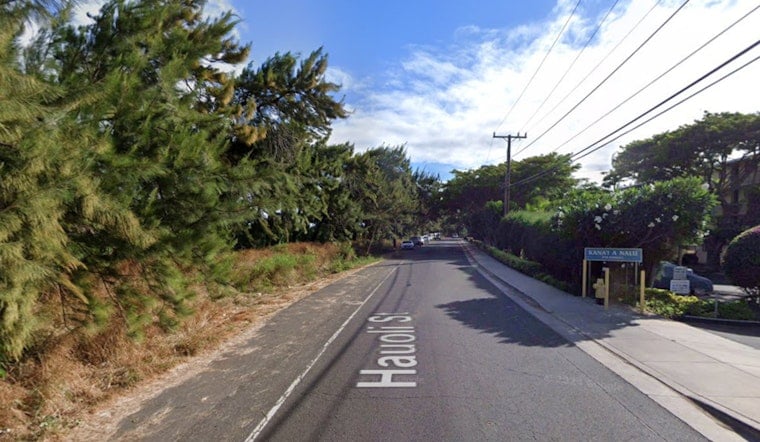
An 80-unit condominium in Māʻalaea has scored county approval to trade in its crumbling seawalls for something much softer: a buried, sand-filled "burrito," a planted dune and a wooden public beach access ramp. The makeover is being pitched as a sea-level-rise adaptation that would restore an unarmored stretch of beach, improve public access and help hold the backshore in place without more concrete in the surf zone.
The Maui Planning Department has issued a finding of no significant impact for the Kanai A Nalu project at 250 Hauʻoli St., clearing a major procedural hurdle while leaving several key permits still on deck, according to Maui Now. The condominium association must still secure a shoreline setback variance, a special management area permit and building, grading and flood-development permits before any sand starts moving. County planners say the proposal reflects a shift toward regional, beach-cell strategies instead of lining the coast with continuous hard armoring.
How the sand 'burrito' is supposed to work
At the center of the design is a geotextile, sand-filled "burrito" made of stacked, sand-packed sacks that are anchored with a buried pipe and tucked back from the shoreline beneath the condo’s rear lawn. The hidden structure, about 6 by 9 feet in cross section, is intended to give the backshore enough stability and time for a 4- to 8-foot native dune to form on top.
That dune would be planted with coastal species such as ʻakulikuli, naupaka and pōhuehue, turning what used to be a hard edge into a living buffer. The same plan also calls for a new wooden ramp to restore public access from Hauʻoli Street to the shoreline. Those design details, along with the ramp proposal, are laid out in the environmental assessment.
Why planners are steering toward soft protection
County planners are looking back at decades of shoreline armoring that followed construction of Māʻalaea Harbor in 1952, an event that helped strip roughly 1,500 feet of beach to the east and eventually produced about 2,400 feet of armored shoreline toward Haycraft Park. University of Hawaiʻi researchers and the U.S. Army Corps of Engineers have tracked chronic sand loss in the littoral cell, with about a foot of shoreline retreat per year and roughly 800 cubic yards of sand disappearing annually, and beach fills placed in 1997, 1998 and 2003 mostly washed away, according to Maui Now.
Jacky Takakura, the county planning director, told the outlet that the Kanai A Nalu proposal illustrates how complicated it is to intervene along older shorelines where buildings sit very close to the water. She also emphasized that the geotextile burrito is not intended as a permanent, forever fix.
Permits, price tag and what happens next
Construction for the project is pegged at about $2.4 million and is expected to take roughly 90 days, according to the environmental assessment. That document also states that the state Office of Conservation and Coastal Lands has agreed that the existing seawalls can be removed once the buried burrito and dune system are in place.
The assessment cautions that the current walls have to stay up during construction to help stabilize the trench for the new structure. It also identifies project contacts, including James Buika of the Maui County Planning Department, Kevin Robinson for the Kanai A Nalu association and consultant Anders Lyons. With several discretionary permits still pending, the construction schedule remains tentative and subject to further review.
The proposal now heads into discretionary hearings and a public comment phase, where neighbors, beach users and planners alike will be watching closely to see whether this softer touch can succeed where previous hard fills did not. If it ultimately wins full approval, the project would become one of Maui’s more visible experiments in managed retreat and dune restoration along a heavily engineered stretch of shoreline.





