

























































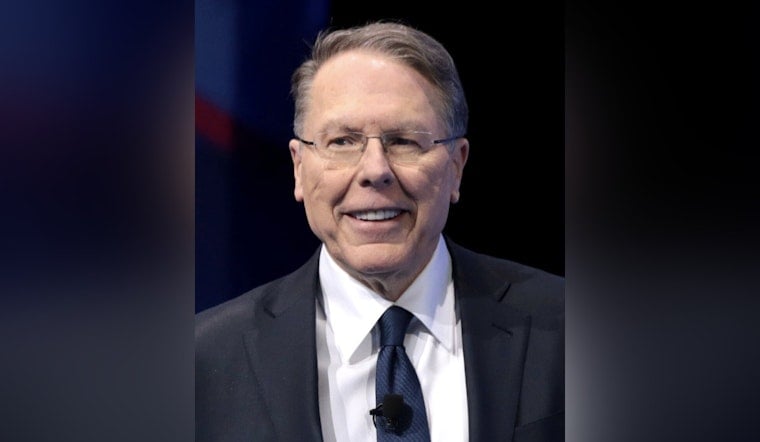
Wayne LaPierre just lost another round in New York. A Manhattan appellate panel on Wednesday upheld a lower-court judgment that blocks the longtime National Rifle Association power broker from serving as an officer or director of the NRA for ten years and orders him to repay roughly $4.35 million to the organization. The Appellate Division, First Judicial Department refused to disturb a December 2024 ruling that followed a jury finding of mismanagement at the NRA. LaPierre had resigned on the eve of the January 2024 trial after more than three decades at the top of the group.
Appellate Panel Backs Restitution And Leadership Ban
In a press release, the New York Attorney General's Office said the appellate court rejected LaPierre's challenge and left the December 2024 judgment fully intact. “Wayne LaPierre and other senior NRA leaders broke the law by funneling millions of dollars in lavish perks to themselves and their families,” Attorney General Letitia James said, calling the decision a win for rank-and-file NRA members rather than its former leadership. The office described the ruling as a step toward reimbursing the NRA and locking in governance reforms ordered after the trial.
Trial Background
The case grew out of an August 2020 lawsuit by Attorney General James that accused NRA leaders of self-dealing, suppressing whistleblowers and filing false regulatory reports. At trial, a jury concluded that the NRA, LaPierre and other officers caused about $7.4 million in monetary harm. Judge Joel M. Cohen later ordered LaPierre to repay roughly $4.35 million, as reported by Brooklyn Eagle. LaPierre retired shortly before the January 2024 trial, stepping down after more than 30 years at the organization’s helm.
Appeals And Next Steps
After the judgment issued, LaPierre filed a notice of appeal and, according to court filings described by Courthouse News, had already paid roughly $4.3 million while trying to recover that money through the courts. The Appellate Division rejected arguments that the financial award and decade-long ban were really an unconstitutional punishment for political speech, addressing that claim directly in its ruling. If either side wants to keep the fight going, the next step is a request for permission to appeal to the New York Court of Appeals, as outlined on the state courts’ website NYCourts.
What It Means For The NRA
The decision leaves in place remedies that judges and jurors have described as compensatory and focused on cleaning up governance rather than shutting the NRA down outright. It also reinforces the Attorney General’s push to tighten oversight of large nonprofits headquartered in New York. The Attorney General’s release framed the ruling as a win for accountability and transparency in how charities are run, according to the New York Attorney General's Office. For the NRA, the order keeps restrictions on who can serve in its New York leadership and maintains court supervision over reforms the Attorney General sought to impose.
Legal observers say the case will remain one to watch as both sides weigh further appeals, turning what began in 2020 as a nonprofit enforcement action into a long-running test of how far regulators can go in policing major charities. Reporting and court filings show the dispute has already wound through multiple appeals and procedural skirmishes, and the Appellate Division’s latest move keeps the December 2024 sanctions in place while any additional review plays out, as reported by Courthouse News.





.jpg)