

























































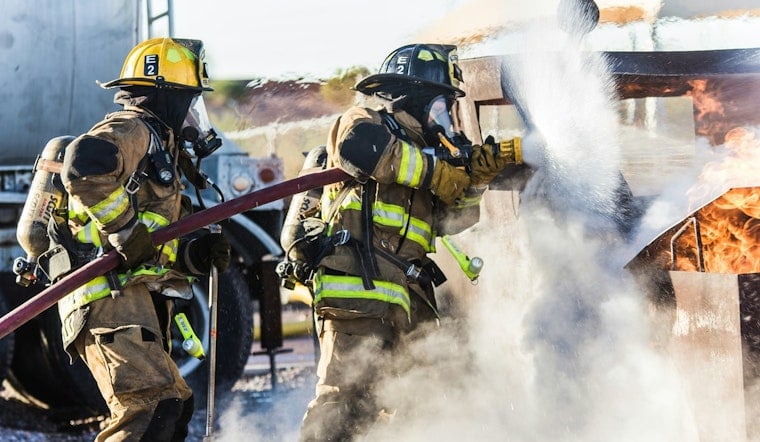
North Carolina lawmakers are quietly loading the state budget with money to hunt down and tackle PFAS contamination around fire stations, a targeted move meant to protect both firefighters and nearby well users from the so‑called "forever chemicals." The cash is pitched as research and short‑term mitigation, not a full overhaul of water systems or a mass swap‑out of gear. Advocates and researchers say the spending is a direct response to mounting evidence that turnout gear, firefighting foam and station wells can carry PFAS that may raise cancer risks for public‑safety workers.
According to WRAL, the budget proposal released Tuesday would give the North Carolina Collaboratory at UNC‑Chapel Hill $15 million to research and remediate PFAS "near North Carolina fire stations." The outlet reported that the funding could be used to test wells used by firefighters, truck in temporary water for stations with elevated PFAS and build a pilot program for deep‑cleaning turnout gear.
What The Legislation Says
The bill text posted on the General Assembly's website spells out broader and more detailed appropriations than some early summaries suggested. Senate Bill 1043 would appropriate $25 million in nonrecurring funds to the UNC Board of Governors to be allocated to the North Carolina Collaboratory for firefighter protection funding, and it sets $14 million in recurring funds for Collaboratory PFAS research and creates a PFAS Mitigation Fund. The Collaboratory would be required to document how it used the money in its reporting.
Those statutory details lay out allowable uses that range from mobile analytical platforms to voluntary human exposure studies. The full language is available through the North Carolina General Assembly.
Why Firefighters Are A Focus
Recent research in North Carolina has found PFAS in station air and in turnout‑gear storage areas, and Duke scientists are leading work to track occupational exposures and cancer risk among firefighters. A peer‑reviewed study in Environmental Science: Processes & Impacts sampled multiple stations and detected volatile PFAS compounds in indoor air and gear storage zones.
Duke researchers are also running wristband and serum testing across a statewide firefighter cohort to map exposures and health outcomes, according to the Duke Cancer Institute. Together, the findings have helped turn firefighters into a high‑priority group in the state’s broader PFAS fight.
What The Funds Could Pay For
Budget summaries and bill language lay out a shopping list of potential uses: buying analytical equipment or mobile labs, testing wells used by firefighters, bringing in tankers of potable water to stations with contaminated wells, installing longer‑term filtration like reverse osmosis or granular activated carbon, and funding pilot programs to deep‑clean turnout gear with state partners. As reported by WRAL, the package would also allow voluntary human exposure studies and supplemental support for emergency drinking‑water funds in affected areas.
Legal And Regulatory Changes
Senate Bill 1043 does more than write checks. It directs regulators to set maximum contaminant levels for several PFAS compounds, listing PFOA and PFOS at 4.0 parts per trillion and GenX at 10 parts per trillion, and assigns the Department of Environmental Quality both a compliance schedule and PFAS‑mitigation authority. Those provisions, written into statute in the bill text, would give the state a formal framework to flag exceedances and prioritize cleanup work. The full statute language is posted by the North Carolina General Assembly.
Local Reaction And Next Steps
Fire chiefs, volunteers and community advocates say the funding could be a lifeline for dozens of rural departments that rely on private wells and do not have the budget for filtration or trucked water. North Carolina Health News reported earlier this spring that stations in several counties, including a volunteer department near Pinnacle, have already found wells with elevated PFAS and have pushed for temporary water and filtration help.
The budget language still needs final votes and could be tweaked before it reaches the governor. If the spending survives floor changes, the Collaboratory will have to report back on how the money was used. Researchers say the new funding could close key gaps in understanding which mitigation steps actually reduce firefighter exposure and better protect the communities clustered around their stations.




