

























































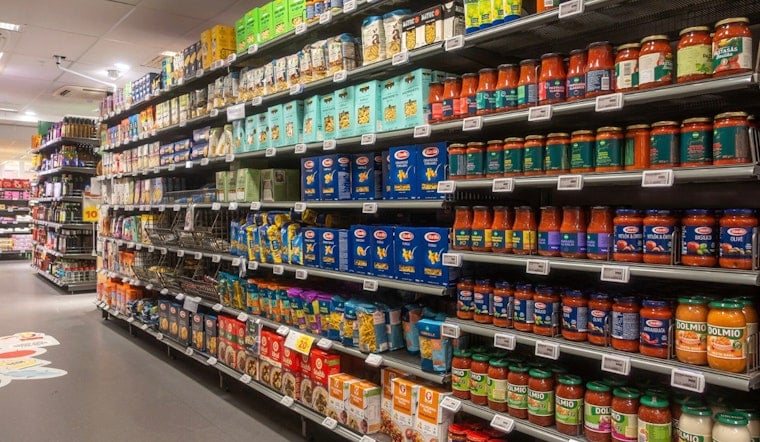
Your milk carton’s bossy little “sell by” date may be on its way out in New York.
State lawmakers have approved a bill that would strip most consumer-facing “sell by” language off food packages and replace the jumble of date phrases with just two: “Use by” when there is a safety concern and “Best if used by” when it is about quality. Supporters say the makeover is aimed at cutting food waste at home, getting more food to donation groups and shaving a bit off grocery bills. The measure now heads to Gov. Kathy Hochul for review.
What the bill would do
The Food Date Labeling Act would ban “sell by” wording on labels aimed at shoppers and require that any manufacturer, processor or retailer that chooses to put a date on a product stick to one of the two standardized phrases. The New York State Senate has framed the bill as a way to reduce consumer confusion and food waste while also protecting retailers and making clear that existing inventory can still be sold under the current labeling system, according to the New York State Senate.
How it would work in practice
Under the bill text, companies that use date labels would have to determine shelf life with scientifically valid methods approved by the state. Where space is tight, they could use short codes such as “UB” for “Use by” or “BB” for “Best if used by.”
The legislation would explicitly allow stores to sell or donate food after a quality date has passed, as long as it is still wholesome. It also directs state agencies to run consumer education campaigns and to require in-store signs that explain what the new terms mean. Infant formula and most alcoholic drinks would be exempt, and the law would generally kick in 180 days after it becomes law, according to the bill text.
Why supporters say it matters
Advocates are leaning on some big national numbers. Federal estimates indicate roughly one-third of food produced in the United States never gets eaten, and food waste makes up about a quarter of municipal solid waste, contributing significant methane emissions as it breaks down in landfills, according to the EPA.
Supporters and food-rescue organizations argue that clearer labels will keep edible food out of the trash and move more of it into donation pipelines. Assemblymember Karines Reyes, one of the bill’s sponsors, has called the measure one that “puts science and clarity where confusion used to be,” and proponents say standardizing labels could help cut both household food waste and grocery costs, according to Syracuse.com.
Industry and implementation hurdles
If the measure becomes law, food companies will have to rework packaging lines and update product codes, a logistical headache they are already navigating in places that moved first. California adopted a similar date-label standard in 2024, and businesses there have been using the lead time to redesign labels and coordinate changes across their distribution networks, according to the Los Angeles Times.
At the federal level, both USDA and FDA have been gathering input on potential date-label reforms, a step industry groups say could make it easier to roll out a unified system nationwide and keep compliance rules consistent across state lines.
What happens next
The bill is now on Gov. Hochul’s desk, and her office says she is reviewing the legislation and must act by the end of the year, according to Syracuse.com.
If she signs it, the law would generally take effect 180 days after it becomes law, a window that supporters say should give manufacturers, grocers and food-donation networks time to adapt while state agencies roll out the required education efforts and in-store signage, per the bill text.





