

























































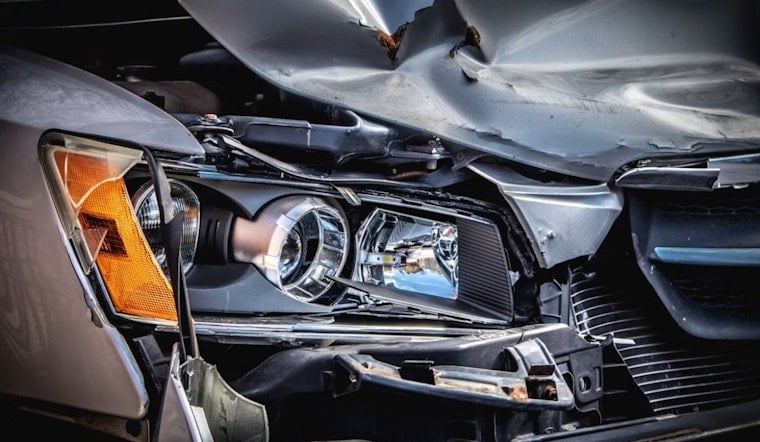
On the tiny slice of I-77 that cuts through Newburgh Heights, crashes went up even as ticket cameras kicked into high gear. Ohio State Highway Patrol records show collisions on the Fleet-to-Grant segment climbed from 32 in 2024 to 44 in 2025, while court filings reviewed by investigators indicate the village mailed nearly 35,000 camera citations in 2025. That spike has locals arguing over whether the crackdown is slowing anyone down or just fattening village coffers.
I-Team investigation
The FOX 8 I-Team found Newburgh Heights leaning hard on both fixed cameras and mobile units, including a speed camera run out of an unmarked pickup. Reporters dug into police logs and court records to chart the huge volume of mail-out tickets. One May citation logged a driver at 115 mph, and several motorists told the station they were never pulled over in person, only surprised later by a notice in the mail.
According to FOX 8 I-Team, the reporting triggered a flood of angry messages from commuters who felt blindsided by the mailed citations. "This is just a speed tax," retired police captain Jeff Cutwright told the station, arguing the setup looks more like a revenue machine than a behavior-change tool. Newburgh Heights Mayor Trevor Elkins countered that the village does not issue citations for speeds under 74 mph in the 60 mph zone and defended the enforcement as lawful and targeted. The I-Team’s cameras also caught commuters and traffic advocates demanding clearer, more visible enforcement to rebuild public trust.
What the traffic data show
State traffic graphics provided to investigators show that, on average, vehicles on this stretch of I-77 tend to run close to the posted limit, with sharp slowdowns during the morning and afternoon rush. That pattern makes it harder to argue that constant, wall-to-wall camera use is the only thing holding speeds in check.
The Ohio Department of Transportation supplied time-series averages taken every 15 minutes, which the I-Team reviewed as part of its coverage. According to Ohio Department of Transportation analysts, the brief dips in speed line up neatly with congestion peaks rather than suggesting nonstop excessive speeding.
Crash counts and trends
Even with average speeds generally hovering near the limit for much of the day, crash totals on the Fleet-to-Grant stretch moved in the wrong direction. State data show 32 crashes in 2024 and 44 in 2025, an increase of more than one-third over a single year.
Traffic-safety experts caution that collision numbers are shaped by a lot of variables - traffic volume, truck traffic, weather, and secondary incidents among them - so they cannot be pinned solely on any one enforcement strategy. Per the Ohio State Highway Patrol, the raw counts for that quarter-mile were 32 crashes in 2024 and 44 in 2025, according to Ohio State Highway Patrol.
What research says
Zooming out beyond Newburgh Heights, large systematic reviews of international studies generally find that speed-camera programs do cut average speeds and reduce collisions at or near camera sites, though the size of the effect depends heavily on how and where the cameras are used. Meta-analyses and expert reviews consistently warn that the strongest safety gains come when cameras are paired with clear signage, public education, and careful targeting of high-risk locations, not just dropped on any stretch of open road.
For an overview of that body of evidence, researchers point to the systematic review summarized in a joint analysis published in BMJ and Cochrane, as per the BMJ / Cochrane review.
Local reaction and next steps
Back home on I-77, commuters and some officials are now calling for tighter rules of the road on enforcement itself: bigger, clearer warning signs, more use of marked police vehicles, and a straightforward, transparent appeals process in court.
The Newburgh Heights Mayor’s Court page notes that photo-enforcement citations from the village are handled through the Garfield Heights Municipal Court, where drivers can contest their tickets. Newburgh Heights Mayor’s Court. State lawmakers and local leaders have signaled that, as public backlash builds in media coverage, they will revisit policies on mobile and unmarked enforcement tools. Recent accounts of that pushback, including complaints about tickets written from unmarked vehicles, have been reproduced in broader coverage, as per AOL.
For the drivers who roll through that quarter-mile every day, the calculation is blunt: ease off the gas and hope you do not get a surprise citation in the mail, or keep your pace and gamble on avoiding a crash. The I-Team has said it will keep tracking court challenges and the village’s enforcement tactics, while Newburgh Heights officials are under mounting pressure to show exactly how the cameras fit into a coherent safety plan. In the short term, traffic engineers and safety advocates continue to point to better signage, visible enforcement, and targeted roadway fixes as the most reliable ways to bring those crash numbers back down.





