

























































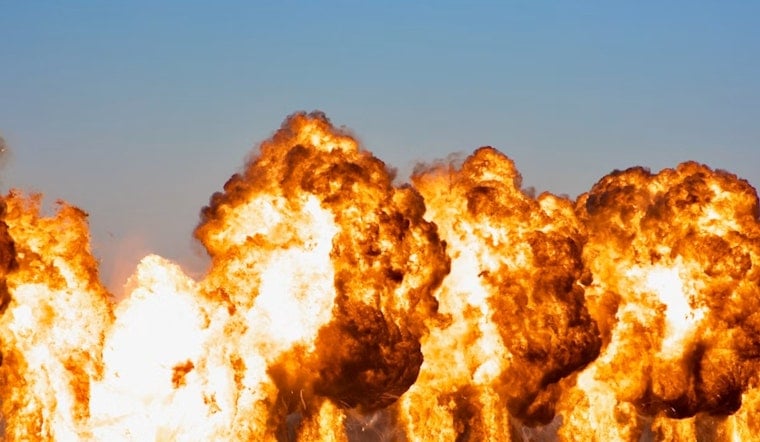
Colorado Springs got a front-row seat to a worst-case scenario rehearsal this week as the FBI led a full-scale simulated nuclear-detonation drill that brought soldiers, airmen, and nuclear-lab experts into the city for hands-on training. Locals in some neighborhoods may have spotted teams in full protective suits and vehicles hauling specialized gear, but officials stressed it was all a planned exercise, not an emergency. The run-through was designed to test both the technical work involved in handling radioactive debris and the complex coordination required in a real mass-destructive event.
Called Prominent Hunt, the multi-agency exercise brought together the FBI, the Department of Energy’s National Nuclear Security Administration and the Department of Defense. Amanda Koldjeski, the special agent in charge of the FBI’s Denver and Wyoming divisions, emphasized at a Friday press conference that regular joint drills are essential so responders do not meet for the first time in a crisis, according to the Denver Gazette.
What the drill trained
Teams staged a mock detonation, then deployed ground crews to collect and package debris and transport the samples to national laboratories for analysis, including Los Alamos and Pacific Northwest, according to the National Nuclear Security Administration. The NNSA says the Prominent Hunt series, which has run with partner agencies since 2012, focuses on getting the right samples to the national laboratories because those lab results are key to determining the origin of nuclear material. Participants also trained in layered protective gear and decontamination procedures meant to limit contamination, protect personnel, and preserve evidence.
Advice for locals
Officials said that if an actual nuclear event ever occurred, the immediate guidance for the public would be straightforward: go inside, stay inside, and wait for updated directions from authorities, while keeping an eye on local media and official social channels, per the Denver Gazette. The Gazette also quoted an FBI official who noted that many suspected hazardous-material calls turn out to be hoaxes or harmless substances like protein powder or baking soda, but that responders are required to treat every report with caution until it is safely resolved.
Why Prominent Hunt matters
Defense officials say Prominent Hunt is primarily about attribution. Nuclear forensics gives the United States a scientific toolkit to trace nuclear material back to its source and to provide evidence that can guide senior leaders and support any response. A Department of Defense report states that demonstrating the ability to identify perpetrators can have a deterrent effect and help ensure that anyone responsible is held fully accountable, according to the Defense Department.
Takeaways
The Army notes that Prominent Hunt rotations are conducted in different states and environments to stress-test procedures and teams, and that they are a routine part of readiness for the 20th CBRNE Command and partner agencies. For residents, the bottom line is simple and does not require a hazmat suit: do not touch suspicious powders or devices, report concerns to local law enforcement and follow emergency instructions from official channels until authorities say it is safe.





