

























































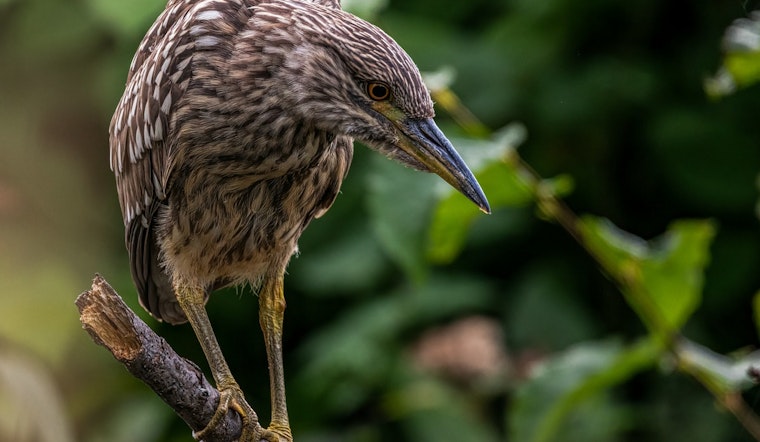
New York’s most stylish night owl of the waterfront, the black-crowned night heron, is quietly slipping toward local extinction. The stocky, roughly two-foot-tall wader, once a familiar sight around the city’s shorelines, is fading fast, and researchers say its collapse is dragging down the entire community of nesting wading birds in the New York–New Jersey Harbor.
A fresh look at four decades of Harbor Herons nesting data finds that nesting waders in the harbor fell by about 27 percent between 2000 and 2022. Researchers say almost all of that drop traces back to a steep decline in black-crowned night heron nesting pairs, as reported by The New York Times. The paper quoted Dustin Partridge describing the birds this way: "they are fashionable, they stay out late and they love exploring new places." The Harbor Herons program’s 2024 survey materials go further, warning the species "may disappear from the harbor by 2035" if current trends continue, according to the NYC Bird Alliance.
Why researchers are worried
Scientists have not nailed down a single cause for the collapse, which is part mystery, part slow-moving disaster. Suspects include chemical contaminants, climate-driven shifts in food and timing, increasing disturbance from people, and rising pressure from predators. Heavy metals and other pollutants are especially troubling because they can build up in eggs and tissues and interfere with reproduction and behavior, as reported by Inside Climate News. New York State’s own species assessment backs up the alarm, documenting steep local declines and listing the black-crowned night heron as a conservation priority for the state.
Where you might still spot one
For now, the birds are still hanging on in scattered corners of the city. Birders report them in Harlem green spaces, along the East River in Queens, and on the Lower East Side, where they work the shoreline at dusk and after dark, according to local guides and the NYC Bird Alliance. Compact by heron standards, they usually stand around two feet tall and are most active at night and twilight, according to the Cornell Lab of Ornithology.
What comes next
Conservation groups are now pushing for more intensive monitoring, tighter controls on key pollutants, and predator management on nesting islands in a bid to buy the herons time. New York’s official species assessment tallies dramatic harbor losses, including a drop of more than half of the harbor’s nesting pairs since 2000, and lists the bird as a High Priority Species of Greatest Conservation Need, according to the New York State Department of Environmental Conservation. That local emergency is unfolding against a much bigger backdrop: researchers estimate nearly three billion fewer birds in North America since 1970, a continent-wide avian crash documented by USGS.





