

























































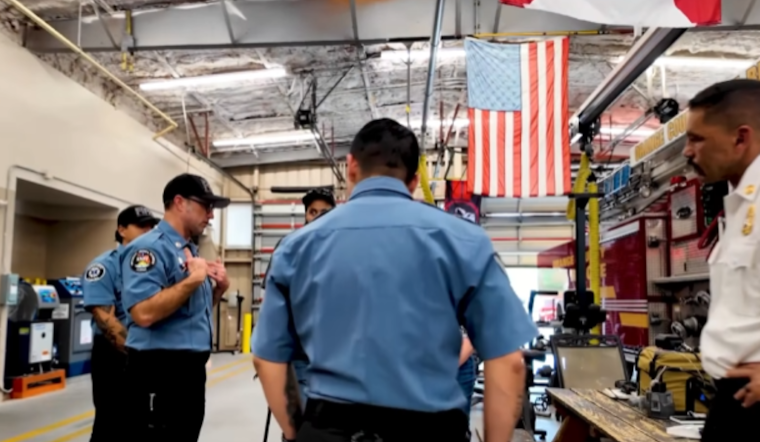
On some of Orange County’s worst crash scenes, paramedics are now doing something that used to be strictly an emergency room move: starting whole-blood transfusions right there beside the patient.
Orange County Fire Rescue’s prehospital whole-blood program lets specially trained paramedics begin transfusions at crash scenes, and the county video shows one motorcycle crash survivor crediting the treatment with helping stabilize him. The setup puts blood directly on firefighter-paramedic units so patients can get hospital-grade transfusions on the way to definitive care. In a county-produced video, Orange County resident Kristopher Baker is seen meeting the crews who treated him as he walks alongside his mother and a service dog.
How the Program Works
Orange County launched its Pre-Hospital Whole Blood Program in 2024, equipping captain-paramedics to transfuse low-titer whole blood on scene or during transport, officials say. Orange County Newsroom has described the effort as part of a wider public-safety investment, and industry reporting has documented early clinical gains. Firehouse reported that OCFR crews administered dozens of units in the program’s first nine months, with measurable improvements in blood pressure and shock index.
Why Minutes Matter and the Statewide Trend
Clinical studies and federal guidance indicate that getting blood into hemorrhaging patients sooner can reduce mortality, which helps explain why a handful of Florida agencies have followed suit. Spectrum Bay News 9 and other local outlets have reported rollouts in Pasco, Alachua, and Sarasota counties this year, often coordinated with regional trauma centers to manage supply and rotation.
The federal EMS website outlines strict protocols for any agency that carries blood in the field, including storage rules, transfusion criteria, and detailed tracking and documentation requirements. EMS.gov
A Survivor's Account
In a Facebook reel posted by Orange County Government on June 11, 2026, battalion chief Alex Ralls-Novo describes patients on these calls as “lacking blood volume and the body’s ability to carry oxygen,” and says the program gives a real opportunity to stabilize patients and buy them time. The video shows Kristopher Baker walking with firefighters, his mother, and a service dog after a motorcycle crash that required a field transfusion, and county officials use the footage to spotlight the program’s real-world benefit. Orange County Government
Tools, Training and Logistics
The rollout hinges on equipment and tight logistics. Crews work with specialized coolers, rapid-delivery administration sets, and inline warmers, and the county rotates units with Orlando’s Level-1 trauma center to avoid waste. Firehouse detailed Peli BioThermal coolers, LifeFlow infusion kits, and QinFlow warmers as part of OCFR’s deployment bag, and noted an “intercept” model that lets a transfusionist rendezvous with an ambulance en route. Dispatch training so that a blood-equipped transfusionist is sent early is a key operational piece, officials say.
Orange County’s video offers a clear local snapshot of a wider but still uncommon national trend. Less than 1 percent of U.S. EMS agencies carry whole blood, even as a growing body of data suggests early transfusion can save lives. EMS.gov and industry reporting note that the shift requires sustained partnerships, training, and funding to scale. County leaders frame the blood program as part of broader public-safety upgrades that already include a new training center and station builds. Orange County Newsroom



