

























































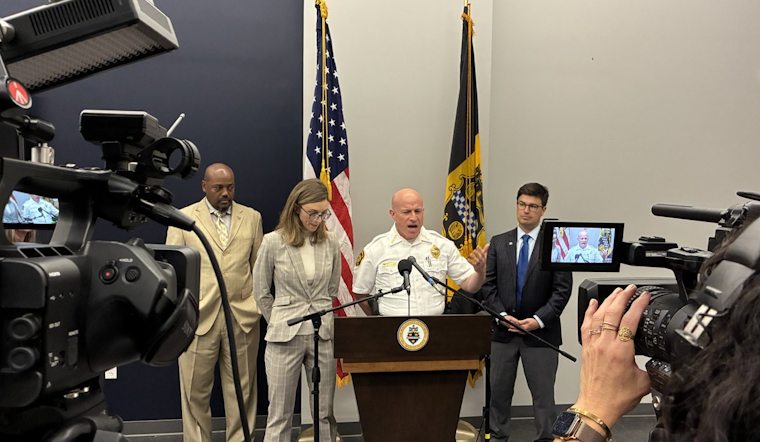
Mayor Corey O’Connor stood alongside Public Safety Director Sheldon Williams and Police Chief Jason Lando on Wednesday to roll out the latest version of Pittsburgh’s co-response program, putting police officers and community social workers back in the same patrol car for mental-health and behavioral-health calls.
Today, Mayor Corey O'Connor, Public Safety Director Sheldon Williams, and Police Chief Jason Lando joined the Office of Community Health & Safety to announce the re-launch of the Co-Response Program.
— Pittsburgh Public Safety (@PghPublicSafety) June 17, 2026
Co-Response pairs Pittsburgh Police officers with community social workers in… pic.twitter.com/q95e8shDwA
The announcement went public on the City of Pittsburgh’s public-safety account on X, where the Office of Community Health & Safety said the program is officially relaunched and slated to reach all police zones, according to City of Pittsburgh Public Safety. The post also highlighted Mayor O’Connor, Director Williams and Chief Lando as the officials leading the reboot.
What the re-launch will change
City officials say the relaunch restores the original model in which a social worker responds alongside a designated officer on behavioral-health calls to expand that setup beyond the earlier pilot areas. As outlined by the Office of Community Health & Safety, co-response teams are designed to link residents to services, ease tense situations, and limit the need for arrests or force.
A program with a short, contentious recent history
Last fall, the city shifted away from embedded co-response and tried a different model: a "crisis response team" that sent pairs of clinicians to scenes only after police had first secured them. That change, and the outcry from some advocates who worried it slowed clinician response, were tracked in local coverage by WESA.
How co-response teams operate
According to the 2023 annual report from the Office of Community Health & Safety, each co-response unit pairs a community social worker with a dedicated Pittsburgh Bureau of Police officer to provide voluntary, trauma-informed, person-centered support and connect people with ongoing care. The report notes that only 2 out of 545 co-response calls involved any use of force, a 0.36 percent rate, which the office says reflects lower force outcomes when clinicians are present on scene.
What comes next
The city’s social post did not spell out a specific rollout calendar. Officials say the timeline will depend on hiring, training, and how the teams are built into dispatch protocols. Budget choices and staffing limits have slowed the program’s growth in the past and will again shape how quickly Pittsburgh actually gets to full citywide coverage, as reported by WESA.
Advocates and council members who pushed to preserve or expand embedded co-response are expected to keep a close eye on whether the city delivers on the broader rollout. Earlier investigative coverage tracing the program’s stops and starts offers key context for that debate, including reporting by WPXI.



