

























































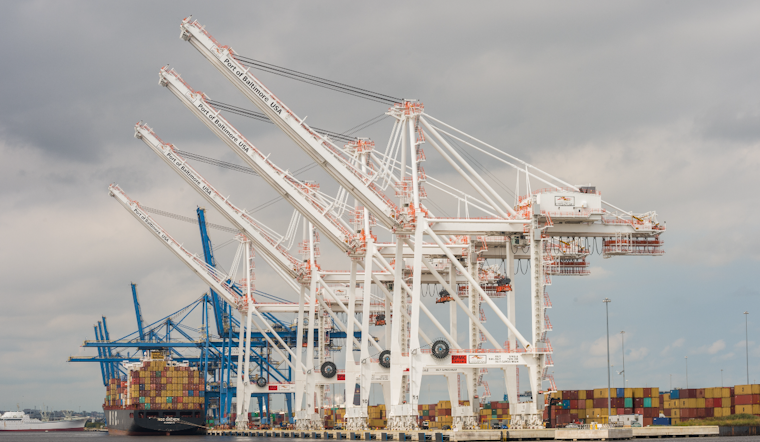
The Maryland Port Administration has scooped up roughly 17 acres of land tucked between two of the Port of Baltimore’s busiest workhorse terminals, a modest but strategic expansion of state-owned property in east Baltimore. The purchase involves two adjoining lots totaling about 17.3 acres in the industrial corridor that sits between the Dundalk and Seagirt facilities, and it arrives on the heels of a banner year for cargo and a wave of public and private investment across the harbor.
As reported by the Baltimore Business Journal, the newly acquired parcels together span about 17.3 acres and are located near the Dundalk and Seagirt terminals. The brief report outlined the acreage and general location but did not detail how the Maryland Port Administration plans to put the land to work.
Where the land sits
Seagirt is the Port of Baltimore’s high-tech container terminal, a roughly 320-acre complex with 50-foot berths and modern ship-to-shore cranes, according to the Maryland Port Administration. The agency highlights Seagirt’s deep berths and intermodal links that support large container services.
Dundalk, meanwhile, is an expansive, roughly 570-acre general-cargo and roll-on/roll-off hub that handles autos, heavy equipment, and breakbulk cargo, with extensive storage and on-site rail. The Maryland Port Administration describes Dundalk as the port’s most versatile facility for large and project cargo.
Why the purchase matters
The deal lands at a time when state officials are talking up a strong rebound at the port. The governor’s office has reported that the Port of Baltimore moved a record 1,113,309 twenty-foot equivalent units in 2025 and logged more vessel calls than in prior years. In a press release, the Office of Governor Wes Moore called the port “a cornerstone of Maryland’s economy,” a bit of context that helps explain why a seemingly small land grab can carry outsized importance for the region’s maritime logistics.
Private investment is also reshaping capacity
At the same time, major private projects are reshaping the local port picture. Tradepoint Atlantic’s Sparrows Point container terminal broke ground this spring in a project expected to add roughly one million TEU of annual capacity and on-dock double-stack rail, a change that industry outlets say will materially increase regional container throughput. WorkBoat covered the Sparrows Point groundbreaking and the private investment that will operate alongside the state-run terminals.
Land immediately adjacent to terminals is often reserved for container yards, vehicle or equipment staging, rail interfaces or related support infrastructure. Having those parcels in state hands gives the Maryland Port Administration more room to maneuver on flows, staging and security as cargo patterns shift. The governor’s office has spotlighted multimodal upgrades and projects, including the Howard Street Tunnel work, that are intended to boost the port’s rail connectivity and throughput in the coming years, according to the Office of Governor Wes Moore.
The Baltimore Business Journal first reported the property purchase, and the Maryland Port Administration has not yet released a detailed public plan for the new acreage. Local records and future MPA filings are expected to clarify whether the land is folded into terminal yards, reserved for buffer and staging, or tapped for some other role in the port’s ongoing modernization push.



