

























































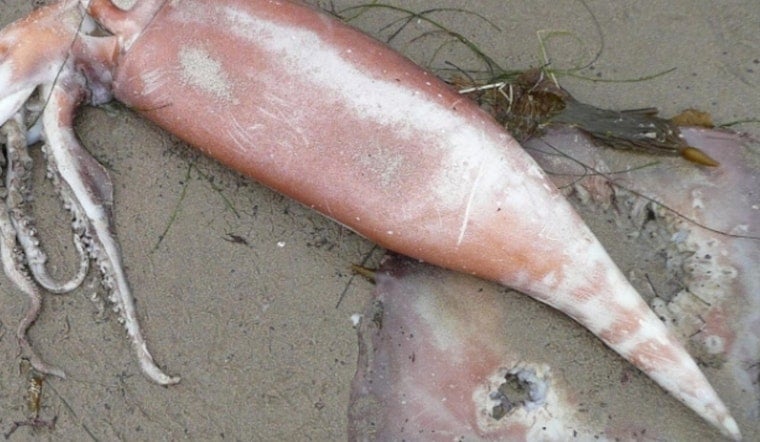
Anyone walking Provincetown's shoreline early Saturday got a shock: thousands of dead squid stretched in pale, slippery lines along the high tide mark, their bodies forming a ghostly border between wet sand and sea. The scene came with a strong, fishy odor drifting into town, while beachgoers and early-morning walkers stopped to take photos and carefully pick their way around the glistening carcasses.
Video from WBZ-TV, shared by CBS News Boston, captured the mass stranding and identified the location as Provincetown, with the outlet reporting that the squid washed up on Saturday. WBZ-TV journalist Ken MacLeod filmed the scene.
Locals quickly posted photos and first-hand accounts on social platforms, including a busy thread in the Provincetown subreddit that showed dense lines of squid and commenters warning that the smell could get worse as the day warmed up. The thread is among the earliest public records of the event; you can see the discussion on Reddit.
Scientists: seasonal spawning and behavior may explain strandings
In the Northwest Atlantic, many squid and other cephalopods have short, roughly one-year lifespans and form large inshore aggregations to spawn in spring and early summer. After spawning, those post-spawning die-offs can lead to mass strandings. Research compiled by the Northeast Fisheries Science Center notes that species that gather to spawn inshore can appear in very large numbers and sometimes wash ashore when the aggregation breaks apart.
Not an unheard-of phenomenon
Mass squid washups have been recorded in other regions and years. In 2012, for example, hundreds of squid washed up along Santa Cruz County beaches in California, when scientists suggested migration patterns and possible algal toxins as contributing factors. Those earlier events, covered by CBS Bay Area, underscore that strandings can result from a mix of natural life-cycle behavior and environmental stressors, rather than a single clear cause.
If you encounter stranded marine life, experts advise not touching or moving the animals and keeping pets away; trained responders should handle carcasses and any samples. NOAA Fisheries recommends reporting sick, injured, or dead marine animals through its regional reporting guidance. In the Northeast, that includes the stranding hotline at (866) 755-6622, so responders can assess the scene and determine whether testing or necropsies are warranted.
Provincetown's waters already see seasonal squid activity, and recent local reporting noted "copious numbers" of squid in the harbor as temperatures climbed. Residents and scientists will be watching to see whether officials or research teams collect specimens that could shed light on this weekend's washup. For now, the images and video offer a striking reminder of how quickly the sea can change.


