

























































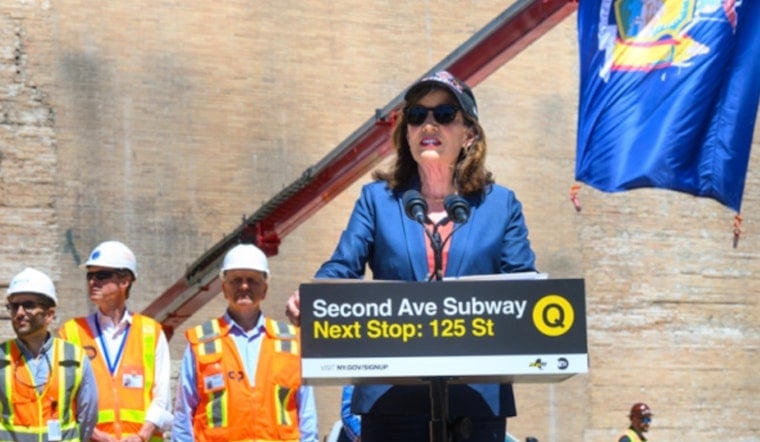
Shovels hit dirt in East Harlem on Monday at the launch site for the next phase of the Second Avenue Subway, the long‑promised stretch that will finally push Q‑line service deeper uptown. The celebration played out around the massive pit where tunnel‑boring machines are set to be lowered next year, drawing state officials, transit brass and neighborhood leaders. For locals who have waited decades for a one‑seat ride to Midtown, officials framed the ceremony as a concrete sign that better service is finally on the way.
TBM Launch Site And The Ceremony
The official groundbreaking unfolded at Second Avenue and East 120th Street, where the governor’s office says a variable‑density tunnel‑boring machine will be lowered in early 2027 to dig north toward 125th Street and Malcolm X Boulevard, kicking off Contract 2 of the project. Project leaders say that machine will carve out the launch box and the underground caverns needed for the future 125th Street station, according to Governor Kathy Hochul’s office.
What Phase 2 Will Deliver
Phase 2 is set to stretch Q service about 1.5 miles from 96th Street up to 125th Street, adding accessible stations at 106th Street and 116th Street and a new 125th Street terminal that will tie directly into the Lexington Avenue line and Metro‑North. Transit officials say the extension could trim as much as 20 minutes off some riders’ trips and serve tens of thousands of people every day, according to the MTA.
How They're Cutting Costs
Officials and independent engineers say Phase 2 should come in cheaper than Phase 1, in part because crews are reusing a long‑abandoned tunnel segment, bundling more work into single contracts and tackling utility relocations before heavy construction ramps up. Those shifts add up to about $1.3 billion in identified savings, including roughly $500 million credited to that 1970s tunnel segment, a figure project leaders point to as evidence the job can be delivered more efficiently, according to ENR.
Timeline And What Comes Next
The tunneling contract that covers the launch box and the northbound bore is valued at about $1.97 billion, and crews have already started relocating utilities and preparing the site ahead of major excavation. Tunnel‑boring machines are expected to arrive early next year, with digging slated to begin in 2027 and passenger service targeted for 2032, according to Smart Cities Dive.
Local Impact
State and transit leaders say the project is expected to generate thousands of union‑wage construction jobs and includes a 20 percent local‑hire target meant to steer work toward East Harlem residents, according to Governor Kathy Hochul’s office. Neighborhood coverage has also tracked job fairs as well as holdouts and property‑access disputes that have slowed some preconstruction survey work; see East Harlem hiring fair for more on outreach and training efforts.
What Neighbors Should Expect
Residents can expect several years of construction, with phased utility work, street excavation and occasional disruptions as crews sink shafts and carve out station caverns. Project teams say they plan to share detailed schedules and hold regular community meetings as the work advances. For maps, timelines and the agency’s outreach calendar, see the MTA’s Phase 2 project page for more information and contacts.




