

























































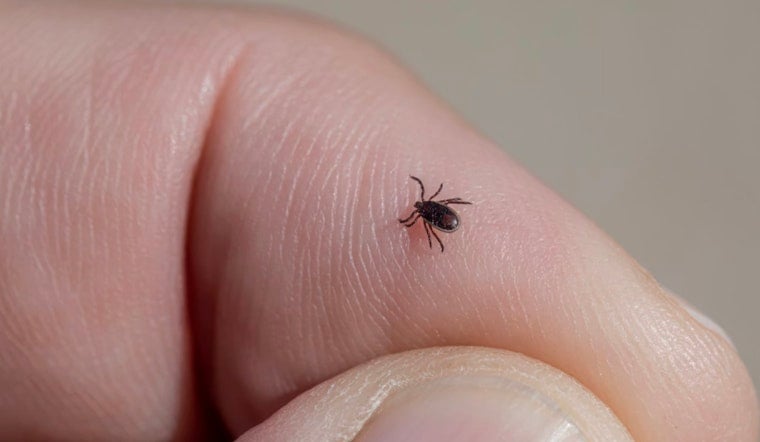
A rare tick-borne bacterium has turned up on Long Island, after a Suffolk County resident sought medical care following a tick bite in a local park. Local coverage described the case as the first documented detection of this particular organism in New York.
The report appeared Saturday, according to LatiNation, which noted that the Suffolk County patient showed early illness and that local public-health labs responded by stepping up surveillance. The New York State Department of Health maintains a detailed information page on anaplasmosis and ehrlichiosis and oversees statewide reporting of tick-borne bacterial infections, giving health officials a clearer view of unusual findings as they emerge. New York State Department of Health.
Why Researchers Are Watching
The detection is raising eyebrows because related Ehrlichia bacteria have been reported mainly in the Upper Midwest rather than the Northeast. A 2011 investigation that first described a closely related Ehrlichia species in Minnesota and Wisconsin found the organism in both sick patients and local deer ticks, underscoring how new pathogens can appear when tick populations push into fresh territory. New England Journal of Medicine.
Some write-ups of the Long Island finding have suggested the microbe is resistant to “standard antibiotics,” but federal guidance tells a more reassuring story. The Centers for Disease Control and Prevention recommends doxycycline as the first-line treatment for ehrlichiosis and stresses that starting empiric therapy early lowers the risk of severe disease in people with suspected tick-borne rickettsial infections. CDC.
How To Protect Yourself
Local and state officials keep coming back to the same bottom line: prevention is your best friend in tick season. They recommend using EPA-registered repellents such as DEET or Picaridin, considering permethrin-treated clothing, wearing light-colored outfits so ticks are easier to spot, and doing a full-body tick check after spending time in brushy or wooded areas.
The Suffolk County Division of Vector Control outlines local surveillance and prevention programs available to residents, while regional climate assessments warn that warming trends are helping some tick species and their pathogens creep farther east and north. Suffolk County Division of Vector Control; New York climate and health review.
What Officials Say They Are Doing
State and county laboratories are following established testing and reporting protocols for tick-borne illnesses, and clinicians are being reminded to keep ehrlichiosis on their radar when a patient shows up with fever, headache and a recent history of tick exposure. New York State Department of Health.
Recent scientific reports, including a published severe case linked to a related Ehrlichia strain, highlight why prompt diagnostic workup and early empiric doxycycline treatment can be lifesaving for vulnerable patients. Emerging Infectious Diseases.





