

























































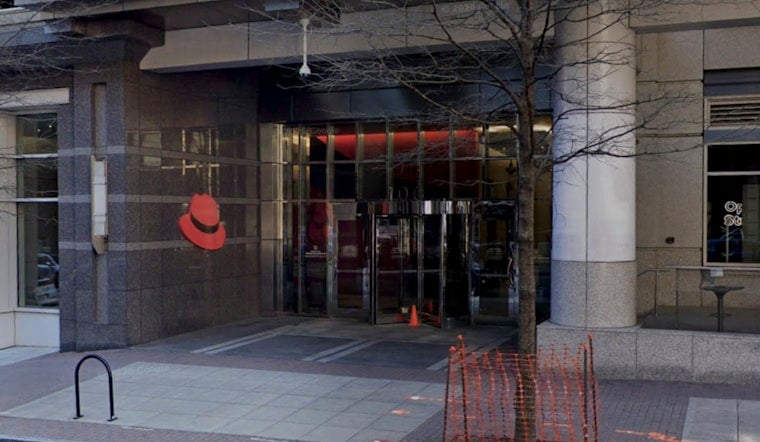
Red Hat’s downtown Raleigh headquarters is suddenly at the center of a $5 billion security push. Red Hat and parent company IBM have rolled out Project Lightwell, a massive program designed to harden the open-source software that underpins much of the internet and enterprise IT. The effort pairs advanced AI tools with what the companies say is a global army of more than 20,000 engineers to hunt down and patch vulnerabilities at scale. For Triangle residents, it is a reminder that a lot of the code businesses rely on is written, maintained and sometimes fixed by people and projects rooted right here in this region.
According to IBM, Project Lightwell combines frontier AI capabilities with engineering teams to identify, validate and remediate vulnerabilities across the open-source stack. The company is framing the roughly $5 billion commitment, along with the deployment of more than 20,000 engineers, as a new model for what enterprise-grade open-source security can look like.
How Lightwell Will Operate
Red Hat describes Lightwell as a kind of clearinghouse where customers can quietly share internal vulnerability findings with AI systems and then get back validated fixes that can be pushed upstream to open-source maintainers. As outlined by Red Hat, the whole point is to move organizations from detection to remediation as quickly as possible, without wrecking system stability or tripping over compliance rules. The companies say early adopters already include major financial heavyweights such as Bank of America, Morgan Stanley and Wells Fargo.
Why Anthropic's Mythos Jolted the Industry
This announcement arrives on the heels of a different AI-fueled scare. Anthropic recently revealed a powerful internal model, Claude Mythos, which the company initially described as too dangerous for broad public release and made available only to vetted partners. As reported by TechCrunch, Mythos and its preview have already been used to expose large numbers of previously hidden vulnerabilities, forcing companies to rethink how fast they really need to find and fix bugs.
Security practitioners and Red Hat leaders say that shift is not theoretical. “AI tooling has shrunken that window to perhaps minutes,” vulnerability analyst Will Dormann said, and Gunnar Hellekson of Red Hat warned that “these models are better at finding security problems than humans,” as reported by The News & Observer. Network security expert HD Moore added that Lightwell “enables organizations without massive AI investments to get the benefit of proactive component auditing and hardening,” the story noted.
Raleigh's Role and the Limits
Red Hat is still headquartered in downtown Raleigh and remains one of the region’s largest tech employers. The company became part of IBM in a roughly $34 billion deal in 2019, per IBM. That local footprint helps explain why the initiative carries the Red Hat name, but company leaders stress that Lightwell is meant to be a global, distributed effort rather than a Raleigh-only operation. Engineers and AI tooling will be pulled from teams across IBM and Red Hat as pilots and broader deployments ramp up.
What to Watch Next
The real test for Lightwell will be whether this AI-plus-engineers playbook actually shortens the time from discovery to safe remediation without accidentally creating new risks. IBM’s CEO has suggested that government agencies may take an interest in private-sector solutions operating at this scale, and analysts are watching the first rollouts at major banks and critical-infrastructure firms to see whether AI ends up helping defenders more than attackers, according to Axios.





